If you have fatty liver, the main foods and drinks to avoid or strongly limit are alcohol, sugary beverages, foods high in added sugar, frequent fried and ultra-processed foods, refined carbohydrates, processed meat, and foods high in saturated fat. A better fatty liver diet focuses on vegetables, whole fruits, legumes, whole grains, lean protein, nuts, seeds, and healthier fats. The goal is not to follow an extreme diet, but to reduce excess calories and improve overall metabolic health.
Fatty liver disease is now commonly discussed as Metabolic Dysfunction-Associated Steatotic Liver Disease (MASLD) when it is linked to metabolic risk factors. The condition involves excess liver fat and may progress to liver inflammation, scarring, or other liver problems in some people. Food choices matter, but your overall eating pattern, physical activity, weight management, blood sugar, and other metabolic factors matter too.
Avoid vs. Limit: What Should You Actually Cut Back On?
Not every food needs to be completely banned. In most cases, it is more useful to understand which foods should be avoided regularly and which ones should simply be eaten in smaller portions.
| Foods and drinks to avoid or limit | Better choices |
| Sugary soft drinks and sweetened beverages | Water, unsweetened tea, or plain coffee |
| Packaged sweets and desserts | Whole fruit or small portions of homemade options |
| Frequent samosa, kachori, pakora and fries | Roasted, baked, steamed, or air-fried foods |
| White bread and other refined carbohydrates | Whole-grain roti, oats, or other whole grains |
| Processed meat such as sausages and bacon | Fish, chicken, eggs, beans, or lentils |
| Excess butter, cream and high-saturated-fat foods | Nuts, seeds and unsaturated fats |
| Frequent fast food and ultra-processed snacks | Simple home-cooked meals |
The biggest mistake is often not one particular food. It is a repeated pattern of high-sugar drinks, large portions, fried foods, refined carbohydrates, processed foods, and excess calories.
1. Alcohol and Sugary Drinks
Alcohol deserves special attention because the liver has to process it, and alcohol can contribute to liver injury. If you have fatty liver, alcohol intake should be discussed with your doctor, particularly if you have significant fibrosis, cirrhosis, or another alcohol-related liver condition. For people with substantial fibrosis, complete abstinence may be recommended.
Sugary beverages are another major concern. Soft drinks, sweetened tea, energy drinks, sports drinks, packaged fruit drinks, and many commercial juices can add a large amount of sugar without making you feel full. Current liver guidelines recommend avoiding sugar-sweetened beverages as part of dietary management for MASLD.
Drinks to avoid with fatty liver include:
- Regular soft drinks
- Sweetened packaged juices
- Energy drinks with added sugar
- Sweetened iced tea
- Sugar-heavy coffee drinks
- Flavoured drinks with added sugar
- Frequent alcohol consumption
A simple swap can make a meaningful difference: choose water, sparkling water without added sugar, unsweetened tea, or unsweetened coffee instead.
2. Foods High in Added Sugar
Added sugar can easily push your daily calorie intake higher than you realise. Regularly eating sweets, desserts, bakery products, and sugar-heavy snacks can make weight management more difficult and may work against your fatty liver eating plan.
Common examples include Jalebi, Gulab Jamun, Rasgulla, cakes, cookies, pastries, chocolates, sweetened cereals, and packaged desserts. These foods do not have to become forbidden foods forever, but frequent large portions should be avoided.
When choosing a snack, consider foods that provide more nutrition and satiety. Whole fruit, plain yogurt, nuts, seeds, roasted chana, or a small portion of homemade food can usually fit more easily into a balanced fatty liver diet.
The important point is to focus on the overall pattern of added sugar, rather than becoming afraid of every food that tastes sweet. Whole fruits contain naturally occurring sugars along with fiber and other nutrients and are different from sugar-sweetened drinks.
3. Fried, Fast and Ultra-Processed Foods
Fried foods can be high in calories and unhealthy fats, especially when they are eaten frequently or prepared with large amounts of oil. A regular diet containing fried and ultra-processed foods can make weight management harder and may negatively affect metabolic health.
For an Indian fatty liver food list, foods worth cutting back on include samosa, kachori, pakora, puri, French fries, chips, fried namkeen, burgers, pizza, and heavily processed snacks.
You do not need to completely remove traditional Indian foods from your life. The preparation method and frequency can often be changed:
- Choose grilled, baked, steamed, or roasted foods more often.
- Use less oil when cooking at home.
- Replace fried snacks with roasted chana, nuts, fruit, or homemade snacks.
- Keep fast food occasional rather than making it a routine meal.
- Prefer home-cooked meals when possible.
The goal is not to create a perfect diet. It is to make the healthier choice the usual choice.
4. Refined Carbohydrates
Refined carbohydrates are another area where portion size and food quality matter. White bread, maida-based foods, refined pasta, noodles, biscuits, and large portions of white rice can provide carbohydrates without as much fiber as less-refined alternatives.
This does not mean that carbohydrates must be eliminated.
If you enjoy roti or rice, they can still be included in a balanced meal. The more useful approach is to control portions and combine carbohydrates with vegetables, protein, and fiber-rich foods. Whole grains can also be chosen more often.
Better options can include:
- Whole-grain roti
- Oats
- Brown rice
- Barley
- Dal
- Chana
- Rajma
- Other beans and legumes
- Vegetables with meals
For example, a plate containing a moderate portion of rice, dal, vegetables, and a protein source is very different from a large bowl of white rice followed by a sugary dessert and a sweetened drink.
So, when asking what not to eat with fatty liver, think beyond individual foods. The combination, portion size, frequency, and overall calorie intake matter.
5. Processed Meat and Foods High in Saturated Fat
Processed meat such as sausages, bacon, salami, and other heavily processed meat products should not be a regular part of a fatty liver diet. Current MASLD guidelines also encourage reducing red and processed meat while favouring healthier protein sources.
Foods high in saturated fat also deserve attention. These may include large amounts of butter, cream, fatty cuts of meat, and other high-fat foods. Excessive use of ghee can also increase calorie intake, even though ghee itself does not need to be treated as a completely forbidden food.
Instead, focus more often on foods containing unsaturated fats, such as nuts, seeds, and plant-based oils, while keeping portions appropriate.
Good protein choices can include:
- Fish
- Skinless chicken
- Eggs
- Dal
- Chana
- Rajma
- Beans
- Low-fat or suitable dairy products
The aim is not to remove all fat from the diet. Your body needs dietary fat. The goal is to improve the quality and quantity of fat you eat.
6. What Can You Eat Instead?
A good fatty liver diet is not simply a list of foods you cannot eat. It should also tell you what to put on your plate.
A practical plate can be built around vegetables, a protein source, a moderate portion of high-fiber carbohydrates, and a small amount of healthier fat. This approach is easier to maintain than an extremely restrictive diet.
Fatty liver healthy foods can include:
- Green leafy vegetables
- Cauliflower, broccoli, carrots, beans, and other vegetables
- Whole fruits
- Oats and other whole grains
- Dal, chana, rajma, and other legumes
- Fish and lean protein
- Eggs
- Nuts and seeds
- Unsaturated fats in appropriate portions
- Water and unsweetened beverages
Whole fruits such as apples, guava, oranges, pears, and berries can fit into a healthy eating pattern. Whole fruit is generally a better choice than fruit juice because the whole fruit retains its fiber.
What about rice, roti, eggs and ghee?
These foods do not automatically need to be eliminated.
Rice: A moderate portion can fit into a balanced meal. Higher-fiber grains can be chosen more often.
Roti: Whole-grain roti can be a practical carbohydrate choice, especially when paired with vegetables and protein.
Eggs: Eggs can provide protein and can fit into a balanced diet. Preparation matters, so avoid turning them into a high-calorie fried meal.
Ghee: Small amounts can fit into some diets, but large amounts can add substantial calories and saturated fat.
This is one reason why a good Indian diet for fatty liver should be based on sustainable changes rather than unrealistic food restrictions.
7. Simple Dietary Changes That Support Fatty Liver Improvement
The best fatty liver eating plan is one that can actually be followed for months and years. Crash diets and extreme restrictions may be difficult to maintain and are not necessary for everyone.
If you are overweight or have obesity, gradual weight loss can reduce liver fat. NIDDK notes that losing at least 3% to 5% of body weight can reduce liver fat, while some people may need around 7% to 10% weight loss to improve liver inflammation and fibrosis. Rapid weight loss should be avoided because it can be harmful.
Use this 7-step fatty liver diet framework:
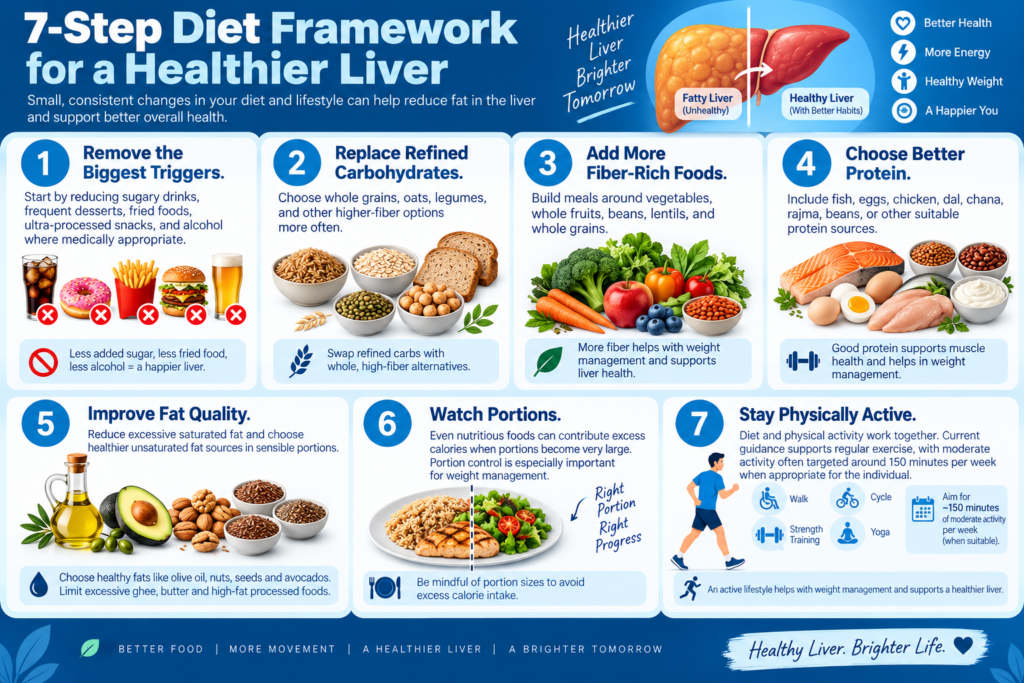
Step 1: Remove the biggest triggers.
Start by reducing sugary drinks, frequent desserts, fried foods, ultra-processed snacks, and alcohol where medically appropriate.
Step 2: Replace refined carbohydrates.
Choose whole grains, oats, legumes, and other higher-fiber options more often.
Step 3: Add more fiber-rich foods.
Build meals around vegetables, whole fruits, beans, lentils, and whole grains.
Step 4: Choose better protein.
Include fish, eggs, chicken, dal, chana, rajma, beans, or other suitable protein sources.
Step 5: Improve fat quality.
Reduce excessive saturated fat and choose healthier unsaturated fat sources in sensible portions.
Step 6: Watch portions.
Even nutritious foods can contribute excess calories when portions become very large. Portion control is especially important for weight management.
Step 7: Stay physically active.
Diet and physical activity work together. Current guidance supports regular exercise, with moderate activity often targeted around 150 minutes per week when appropriate for the individual.
A simple fatty liver diet chart can therefore follow this basic structure:
½ plate: Vegetables
¼ plate: Protein such as dal, fish, chicken, eggs, or beans
¼ plate: Whole grains or another high-fiber carbohydrate
Small portion: Nuts, seeds, or a healthy oil
Drink: Water or another unsweetened beverage
Remember that dietary needs can differ based on diabetes, obesity, cholesterol levels, medications, kidney disease, and the severity of liver disease. A doctor or registered dietitian can help individualise a fatty liver meal plan.
Bottom Line
The worst foods for fatty liver are usually not one single food. The bigger problem is a regular pattern of sugary beverages, added sugar, fried foods, ultra-processed foods, refined carbohydrates, processed meat, excess saturated fat, alcohol, and excess calories.
Instead of following extreme fatty liver diet restrictions, build meals around vegetables, whole fruits, legumes, whole grains, lean protein, nuts, seeds, and healthier fats. Small changes that are maintained consistently are more useful than a strict diet that cannot be followed.
If you have been diagnosed with fatty liver, your doctor may also recommend checking liver enzymes, metabolic risk factors, and the degree of liver fibrosis so that your diet and treatment plan can be matched to your individual needs.
Frequently Asked Questions
Can Fatty Liver Be Reversed Naturally?
Yes, fatty liver can often be improved with healthy eating, regular physical activity, and gradual weight loss when appropriate. The cause and severity should also be assessed by a healthcare professional.
Is White Rice Safe for People With Fatty Liver?
Yes. White rice does not have to be completely eliminated, but portion size matters. Higher-fiber whole grains can be chosen more often.
Which Fruits Are Better for Fatty Liver?
Whole fruits such as apples, berries, oranges, guava, and pears can fit into a healthy diet. Whole fruit is generally preferred over fruit juice because it provides fiber.
Is Coffee Beneficial for Liver Health?
Coffee has been associated with less advanced liver disease in observational research and can fit into a healthy diet for many people. Individual advice may differ, especially when significant liver fibrosis or other medical conditions are present.
Ready to Take the Next Step?
If you have fatty liver or are concerned about your liver health, book an appointment with a gastroenterologist to understand your liver condition and get a diet and treatment plan tailored to your needs. Early evaluation can help identify metabolic risk factors and prevent the condition from progressing.
👉 Book your consultation today and take the first step toward better liver health.