
Imagine two people visiting a gastroenterologist with nearly identical complaints—both have abdominal pain, bloating, and frequent trips to the bathroom. One is diagnosed with Irritable Bowel Syndrome (IBS), while the other has Inflammatory Bowel Disease (IBD). Although their symptoms may appear similar at first, these conditions are fundamentally different in terms of their causes, diagnosis, treatment, and long-term health impact.
This distinction is more important than many people realize. IBS is a functional gastrointestinal disorder that affects how the digestive tract works, whereas IBD is a chronic inflammatory disease that can damage the intestines over time. Mistaking one condition for the other may delay the right treatment and increase the risk of complications. If you’ve been searching for the difference between IBS and IBD, this guide explains everything you need to know in simple, medically accurate language.
Quick Answer
IBS (Irritable Bowel Syndrome) is a functional bowel disorder that affects how the digestive system works but does not cause inflammation or permanent intestinal damage. IBD (Inflammatory Bowel Disease) is a chronic inflammatory condition, including Crohn’s disease and Ulcerative Colitis, that causes visible inflammation and may damage the digestive tract.
What Is IBS (Irritable Bowel Syndrome)?
Irritable Bowel Syndrome (IBS) is one of the most common digestive disorders worldwide. It is classified as a functional gastrointestinal disorder, meaning the digestive tract appears normal during tests such as a colonoscopy, but the way it functions is altered. In other words, the bowel becomes more sensitive, and its normal movement may become irregular, leading to recurring digestive symptoms.
People living with IBS often experience abdominal pain, bloating, constipation, diarrhea, or a combination of both. These symptoms may come and go over time and are frequently triggered by stress, certain foods, hormonal changes, or disturbances in the brain-gut axis. Although IBS can significantly affect quality of life, it does not cause ulcers, bleeding, or permanent damage to the intestines.
Common Symptoms of IBS
- Abdominal pain or cramping
- Bloating and abdominal fullness
- Excessive gas
- Constipation (IBS-C)
- Diarrhea (IBS-D)
- Alternating constipation and diarrhea (IBS-M)
- Mucus in stool
- Feeling of incomplete bowel emptying
Doctor’s Tip
If your abdominal pain improves after passing stool and you do not have blood in your stool, unexplained weight loss, or fever, IBS may be one possibility. However, a proper medical evaluation is essential because several digestive conditions can produce similar symptoms.
Quick Facts About IBS
- IBS affects millions of people worldwide and is more common in younger adults.
- It is considered a functional bowel disorder, not an inflammatory disease.
- IBS does not increase the risk of colorectal cancer.
- Symptoms can often be managed with dietary changes, stress management, and medications tailored to individual symptoms.
What Is IBD (Inflammatory Bowel Disease)?
Unlike IBS, Inflammatory Bowel Disease (IBD) is a chronic condition that causes ongoing inflammation within the digestive tract. Over time, this inflammation can damage the intestinal lining, resulting in ulcers, bleeding, strictures, and other complications if left untreated. Because IBD is associated with an abnormal immune response, many patients require long-term medical treatment and regular follow-up.
The two main forms of IBD are Crohn’s disease and Ulcerative Colitis. Crohn’s disease can affect any part of the digestive tract—from the mouth to the anus—and often involves deeper layers of the bowel wall. Ulcerative Colitis, on the other hand, primarily affects the colon and rectum, causing continuous inflammation of the inner lining.
Common Symptoms of IBD
- Persistent diarrhea
- Blood in stool
- Rectal bleeding
- Severe abdominal pain
- Fatigue
- Unexplained weight loss
- Fever
- Loss of appetite
- Mouth ulcers
- Night-time bowel movements
Clinical Insight
Blood in the stool, persistent fever, and unexplained weight loss are not typical symptoms of IBS. These warning signs require prompt medical evaluation to rule out IBD or other serious gastrointestinal conditions.
Quick Facts About IBD
- IBD includes Crohn’s disease and Ulcerative Colitis.
- It causes chronic inflammation that can damage the digestive tract.
- Symptoms often occur in cycles, with periods of remission and flare-ups.
- Early diagnosis and treatment can help reduce complications and improve long-term outcomes.
IBS vs IBD: Key Differences at a Glance
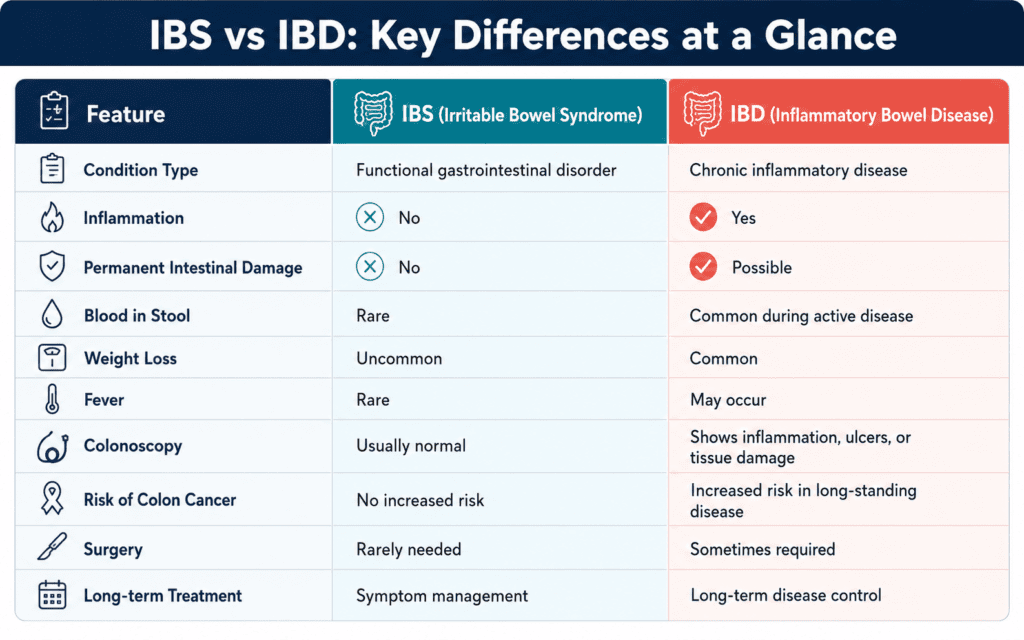
| Feature | IBS (Irritable Bowel Syndrome) | IBD (Inflammatory Bowel Disease) |
| Condition Type | Functional gastrointestinal disorder | Chronic inflammatory disease |
| Inflammation | ❌ No | ✅ Yes |
| Permanent Intestinal Damage | ❌ No | ✅ Possible |
| Blood in Stool | Rare | Common during active disease |
| Weight Loss | Uncommon | Common |
| Fever | Rare | May occur |
| Colonoscopy | Usually normal | Shows inflammation, ulcers, or tissue damage |
| Risk of Colon Cancer | No increased risk | Increased risk in long-standing disease |
| Surgery | Rarely needed | Sometimes required |
| Long-term Treatment | Symptom management | Long-term disease control |
Red Flag Symptoms – Don’t Ignore These
Seek medical attention if you experience:
- Blood in your stool
- Persistent diarrhea lasting more than two weeks
- Unexplained weight loss
- Fever with digestive symptoms
- Severe abdominal pain
- Ongoing fatigue or anemia
- Night-time bowel movements
IBS vs IBD Symptoms: Why They Are Often Confused
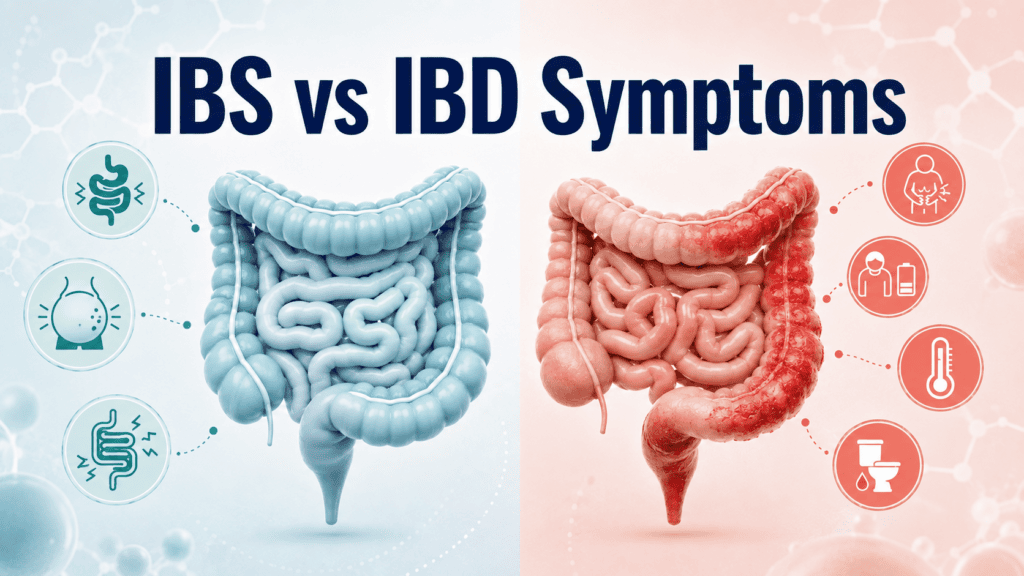
One of the biggest reasons people confuse IBS and IBD is that both conditions affect the digestive system and can cause abdominal pain, bloating, diarrhea, or changes in bowel habits. However, the underlying cause of these symptoms is very different. IBS results from changes in bowel function and increased gut sensitivity, whereas IBD is caused by chronic inflammation that can physically damage the digestive tract.
A helpful way to remember the difference is this: IBS affects how the bowel works, while IBD affects the bowel itself. In IBD, inflammation can lead to ulcers, bleeding, and nutritional deficiencies, making early diagnosis especially important.
Patient Scenario
A 30-year-old professional develops bloating, constipation, and abdominal discomfort that worsens during stressful workweeks. Medical tests, including a colonoscopy, are normal, and the symptoms improve after bowel movements—suggesting IBS.
Another patient experiences bloody diarrhea, fatigue, and weight loss over several months. Colonoscopy reveals inflammation of the colon, leading to a diagnosis of Ulcerative Colitis, a form of IBD. Although both patients complained of digestive problems, the diagnosis and treatment were completely different.
IBS vs IBD: Causes, Risk Factors & Diagnosis
Understanding what causes IBS and IBD is one of the easiest ways to differentiate between these two conditions. Although both affect the digestive system and may produce similar symptoms, the underlying disease process is completely different. IBS is primarily a disorder of gut function, whereas IBD results from chronic inflammation caused by an abnormal immune response.
For this reason, gastroenterologists use different diagnostic approaches and treatment strategies for each condition. Identifying the correct cause is the first step toward effective management.
What Causes IBS?
The exact cause of Irritable Bowel Syndrome (IBS) is still not fully understood. Instead of one single trigger, IBS is believed to develop due to a combination of factors that affect how the digestive system functions.
Researchers believe the condition is closely linked to the brain-gut axis, a communication network connecting the brain and the intestines. When this communication becomes disrupted, the intestines may become overly sensitive or contract abnormally, leading to pain, bloating, constipation, or diarrhea.
Unlike IBD, IBS does not cause inflammation, ulcers, or permanent damage to the digestive tract.
Common Causes and Triggers of IBS
- Altered brain-gut communication
- Increased gut sensitivity (visceral hypersensitivity)
- Changes in bowel movement patterns
- Stress and anxiety
- Previous intestinal infections (Post-infectious IBS)
- Imbalance in gut bacteria (Gut microbiome)
- Food intolerances (such as dairy, caffeine, spicy foods, or high-FODMAP foods)
- Hormonal fluctuations
Doctor’s Insight
Stress does not directly cause IBS, but it can significantly worsen symptoms. Many patients notice flare-ups during periods of emotional stress, poor sleep, or major lifestyle changes.
What Causes IBD?
Unlike IBS, Inflammatory Bowel Disease (IBD) is caused by chronic inflammation within the digestive tract. The exact reason why this inflammation develops is not completely understood, but experts believe it results from a combination of genetic susceptibility, immune system dysfunction, environmental triggers, and changes in the gut microbiome.
Normally, the immune system protects the body from harmful bacteria and viruses. In people with IBD, however, the immune system mistakenly attacks healthy intestinal tissue, leading to ongoing inflammation that can damage the digestive tract over time.
This inflammation may result in ulcers, bleeding, narrowing of the intestines (strictures), fistulas, nutritional deficiencies, and other complications if left untreated.
Factors That May Increase the Risk of IBD
- Family history of Crohn’s disease or Ulcerative Colitis
- Immune system abnormalities
- Environmental influences
- Smoking (especially associated with Crohn’s disease)
- Changes in gut bacteria
- Certain infections
- Younger age at diagnosis (although IBD can occur at any age)
Clinical Insight
IBD is not caused by stress alone. While stress may worsen symptoms during disease flare-ups, it is not considered the underlying cause of Crohn’s disease or Ulcerative Colitis.
IBS vs IBD: Causes Compared
| Factor | IBS | IBD |
| Primary Problem | Functional bowel disorder | Chronic inflammatory disease |
| Inflammation | ❌ No | ✅ Yes |
| Immune System Involvement | No | Yes |
| Brain-Gut Axis | Major role | Minor role |
| Genetics | Limited influence | Strong influence |
| Gut Microbiome | May contribute | May contribute |
| Stress | Common trigger | May worsen symptoms but not the cause |
| Permanent Tissue Damage | No | Possible |
Risk Factors: Who Is More Likely to Develop IBS or IBD?
Although anyone can develop digestive disorders, certain factors may increase the likelihood of developing IBS or IBD.
IBS Risk Factors
- Female sex (IBS is more common in women)
- Age below 50 years
- Family history of IBS
- Anxiety, depression, or chronic stress
- Previous episodes of food poisoning or intestinal infection
IBD Risk Factors
- Family history of Crohn’s disease or Ulcerative Colitis
- Smoking (particularly for Crohn’s disease)
- Certain environmental exposures
- Younger age, although diagnosis can occur later in life
- Abnormal immune system activity
Did You Know?
Having a family member with IBD increases your risk of developing the disease. However, most people with digestive symptoms do not have IBD, which is why proper evaluation by a gastroenterologist is essential.
How Is IBS Diagnosed?
There is no single laboratory test that confirms IBS. Instead, doctors diagnose IBS by carefully reviewing your symptoms, medical history, physical examination, and by ruling out other digestive diseases.
One commonly used tool is the Rome IV Criteria, which help identify IBS based on recurring abdominal pain associated with bowel habit changes.
If a patient has warning signs such as blood in the stool, unexplained weight loss, anemia, persistent fever, or a family history of inflammatory bowel disease or colorectal cancer, additional investigations are usually recommended.
Tests That May Be Performed
- Medical history and symptom assessment
- Physical examination
- Blood tests to exclude other conditions
- Stool tests if infection or inflammation is suspected
- Colonoscopy in selected patients with alarm symptoms
Doctor’s Tip
A normal colonoscopy does not mean your symptoms are “imaginary.” Many people with IBS have completely normal test results because IBS affects bowel function rather than bowel structure.
How Is IBD Diagnosed?
Diagnosing IBD requires a combination of clinical evaluation, laboratory testing, imaging, and endoscopic examination. Unlike IBS, IBD usually produces visible signs of inflammation that can be detected during investigations.
A gastroenterologist may recommend several tests depending on your symptoms and medical history.
Common Diagnostic Tests for IBD
Blood Tests
Blood tests can help identify signs of inflammation, anemia, infection, or nutritional deficiencies that are commonly associated with IBD.
Stool Tests
Stool tests may be used to rule out infections and detect markers of intestinal inflammation, such as fecal calprotectin, which can help distinguish IBD from functional disorders like IBS.
Colonoscopy
A colonoscopy is one of the most important investigations for diagnosing IBD. It allows the doctor to directly examine the lining of the colon and obtain tissue samples (biopsies) for further evaluation.
Imaging Studies
Depending on the suspected location and severity of disease, imaging tests such as CT scans or MRI may be recommended to evaluate areas of the digestive tract that cannot be fully assessed during colonoscopy.
IBS vs IBD: Diagnosis Comparison
| Investigation | IBS | IBD |
| Medical History | Essential | Essential |
| Physical Examination | Usually normal | May reveal signs of inflammation or complications |
| Blood Tests | Often normal | May show inflammation, anemia, or nutritional deficiencies |
| Stool Test | Usually normal | May show inflammatory markers such as fecal calprotectin |
| Colonoscopy | Usually normal | Often reveals inflammation, ulcers, or bleeding |
| Biopsy | Typically not diagnostic | Helps confirm the diagnosis and determine disease type |
Diagnostic Journey: From Symptoms to Diagnosis
Digestive Symptoms
│
▼
Medical History & Physical Examination
│
▼
Blood & Stool Tests
│
▼
Alarm Symptoms Present?
├── No → Consider IBS (after excluding other conditions)
└── Yes → Colonoscopy ± Biopsy
│
▼
Evidence of Inflammation?
├── No → Functional disorder (e.g., IBS)
└── Yes → Evaluate for IBD and its subtype
Clinical Pearl
Because IBS and IBD can share symptoms such as abdominal pain and changes in bowel habits, self-diagnosis is not reliable. Persistent symptoms, blood in the stool, weight loss, or fever should always prompt evaluation by a qualified gastroenterologist to ensure an accurate diagnosis and appropriate treatment.
IBS vs IBD Treatment: Why the Right Diagnosis Matters
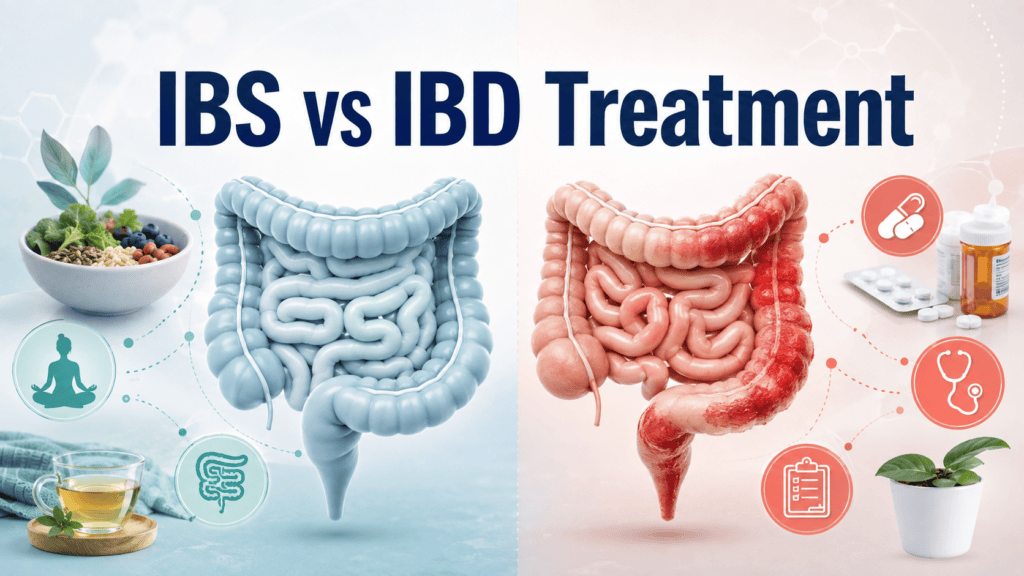
Although IBS (Irritable Bowel Syndrome) and IBD (Inflammatory Bowel Disease) may share symptoms such as abdominal pain, bloating, diarrhea, or constipation, their treatment approaches are completely different.
IBS treatment focuses on controlling symptoms and improving quality of life because there is no structural damage to the digestive tract. In contrast, IBD treatment aims to reduce inflammation, prevent complications, maintain remission, and protect the intestines from permanent damage.
This is why an accurate diagnosis is essential before starting any treatment plan.
How Is IBS Treated?
There is no single cure for IBS, but most people can successfully manage their symptoms through a combination of dietary modifications, lifestyle changes, stress management, and medications tailored to their symptoms.
Since every patient experiences IBS differently, treatment is highly individualized.
Lifestyle Changes
Simple lifestyle modifications often provide significant relief for many people living with IBS.
These include:
- Eating meals at regular times
- Staying well hydrated
- Exercising regularly
- Getting adequate sleep
- Managing stress through relaxation techniques or mindfulness
- Avoiding foods that consistently trigger symptoms
Many patients notice that keeping a food diary helps identify patterns between certain foods and symptom flare-ups.
Dietary Management
Diet plays an important role in managing IBS symptoms.
Your gastroenterologist or dietitian may recommend:
- A Low-FODMAP diet under professional guidance
- Increasing soluble fiber (especially for constipation-predominant IBS)
- Limiting caffeine and alcohol
- Reducing carbonated beverages
- Avoiding excessively spicy or fatty meals if they worsen symptoms
Doctor’s Tip
Do not eliminate multiple food groups without medical advice. An overly restrictive diet may lead to nutritional deficiencies while providing little benefit.
Medications for IBS
Treatment depends on the predominant symptoms.
Your doctor may recommend:
- Antispasmodic medications for abdominal cramps
- Fiber supplements for constipation
- Laxatives (when appropriate)
- Anti-diarrheal medications
- Peppermint oil preparations
- Probiotics in selected patients
- Medications that regulate bowel function
- Low-dose neuromodulators for chronic abdominal pain in carefully selected cases
The goal is symptom control rather than curing the condition.
How Is IBD Treated?
Unlike IBS, Inflammatory Bowel Disease requires treatment to control ongoing inflammation and prevent long-term complications.
Without proper treatment, IBD may lead to intestinal damage, strictures, fistulas, abscesses, nutritional deficiencies, and an increased risk of colorectal cancer in some patients.
Treatment depends on:
- Disease severity
- Disease location
- Type of IBD
- Previous response to medications
- Overall health
Anti-inflammatory Medications
These medicines help reduce inflammation inside the digestive tract and are often used in Ulcerative Colitis.
Corticosteroids
Steroids are commonly prescribed during disease flare-ups to quickly reduce inflammation.
However, they are generally not intended for long-term use because prolonged use may increase the risk of side effects.
Immunomodulators
These medicines reduce abnormal immune activity responsible for chronic inflammation.
They are often used for maintaining long-term remission.
Biologic Therapies
Biologic medicines have transformed IBD treatment over the past decade.
These targeted therapies help control inflammation in patients with moderate to severe disease and may reduce the need for surgery in appropriate cases.
Surgery
While surgery is rarely required for IBS, some patients with IBD may eventually need surgery because of complications such as:
- Intestinal narrowing
- Severe bleeding
- Perforation
- Fistulas
- Disease that no longer responds to medication
Surgery is considered only after careful evaluation by a gastroenterologist and colorectal surgeon.
IBS vs IBD Treatment Comparison
| Treatment | IBS | IBD |
| Lifestyle Modification | ✅ Main treatment | ✅ Supportive |
| Dietary Changes | ✅ Essential | ✅ Important |
| Anti-inflammatory Medicines | ❌ Not required | ✅ Yes |
| Biologic Therapy | ❌ No | ✅ Often required |
| Steroids | ❌ No | ✅ During flare-ups |
| Surgery | Rare | Sometimes necessary |
| Long-term Monitoring | Limited | Essential |
Diet for IBS vs IBD
Although nutrition plays an important role in both conditions, dietary advice differs significantly.
Foods That May Trigger IBS Symptoms
Some people with IBS find that these foods worsen symptoms:
- Fried foods
- Highly processed foods
- Carbonated drinks
- Excess caffeine
- Artificial sweeteners
- Onion and garlic
- Certain dairy products
- Beans and lentils (in some individuals)
Because triggers vary from person to person, personalized dietary advice is often more effective than following a single universal diet.
Diet During IBD
Nutrition should be individualized based on disease activity.
During flare-ups, some patients may need temporary dietary adjustments to reduce symptoms while ensuring adequate nutrition.
Because IBD can affect nutrient absorption, patients may also require monitoring for vitamin and mineral deficiencies as part of their long-term care.
Clinical Note
There is no single “IBD diet” that works for everyone. Dietary recommendations should be personalized based on the patient’s condition, nutritional status, and disease severity.
Red Flag Symptoms You Should Never Ignore
Many digestive complaints are harmless, but certain symptoms require prompt medical evaluation.
🚨 Consult a gastroenterologist immediately if you experience:
- Blood in your stool
- Black, tarry stools
- Persistent diarrhea lasting more than two weeks
- Unexplained weight loss
- Persistent fever
- Severe abdominal pain
- Night-time diarrhea
- Recurrent vomiting
- Difficulty swallowing
- Iron-deficiency anemia
- Family history of IBD or colorectal cancer
These symptoms may indicate IBD or another serious digestive disorder that requires further investigation.
Myth vs Fact
❌ Myth: IBS and IBD are the same disease.
✅ Fact: IBS is a functional bowel disorder, whereas IBD is a chronic inflammatory disease that can damage the intestines.
❌ Myth: IBS causes colon cancer.
✅ Fact: Current evidence does not show that IBS itself increases the risk of colorectal cancer.
❌ Myth: Blood in the stool is normal with IBS.
✅ Fact: Blood in the stool is not a typical feature of IBS and should always be evaluated by a doctor.
❌ Myth: Stress causes IBD.
✅ Fact: Stress may worsen symptoms during flare-ups, but it is not considered the underlying cause of IBD.
Real-Life Patient Scenario
Case 1: Functional Disorder (IBS)
A 29-year-old software engineer experienced abdominal bloating, constipation, and intermittent cramping that worsened during periods of work-related stress. Blood tests and colonoscopy were normal, and symptoms often improved after passing stool. After evaluation, the patient was diagnosed with Irritable Bowel Syndrome and improved with dietary modifications, stress management, and symptom-directed medication.
Case 2: Inflammatory Disease (IBD)
A 34-year-old teacher presented with persistent diarrhea, blood in the stool, fatigue, and significant weight loss over several months. Colonoscopy revealed continuous inflammation of the colon, and biopsy confirmed Ulcerative Colitis, a type of Inflammatory Bowel Disease. The patient required anti-inflammatory medication and long-term follow-up to control the disease and prevent complications.
These examples illustrate why similar digestive symptoms can have very different underlying causes and why self-diagnosis should be avoided.
When Should You See a Gastroenterologist?
You should consult a gastroenterologist if you experience:
- Persistent abdominal pain
- Frequent diarrhea or constipation lasting several weeks
- Blood in your stool
- Unexplained weight loss
- Ongoing bloating that affects daily life
- Chronic fatigue with digestive symptoms
- Difficulty swallowing
- Family history of Crohn’s disease, Ulcerative Colitis, or colorectal cancer
- Symptoms that do not improve despite lifestyle changes
Early evaluation can help identify the underlying cause and ensure that appropriate treatment begins before complications develop.
Frequently Asked Questions (FAQs)
1. Is IBS the same as IBD?
No. Irritable Bowel Syndrome (IBS) is a functional disorder that affects how the digestive tract works, while Inflammatory Bowel Disease (IBD) is a chronic inflammatory condition that can damage the intestines. Although some symptoms overlap, they are different conditions requiring different treatments.
2. Which is more serious: IBS or IBD?
IBD is generally considered more serious because it causes ongoing inflammation that may lead to complications such as ulcers, strictures, fistulas, malnutrition, and an increased risk of colorectal cancer in some patients. IBS can significantly affect quality of life but does not cause permanent intestinal damage.
3. Can IBS turn into IBD?
No. IBS does not develop into IBD. However, because the symptoms can be similar, some people initially diagnosed with IBS may later be found to have IBD after further evaluation.
4. Does IBS cause blood in stool?
No. Blood in the stool is not a typical symptom of IBS. If you notice rectal bleeding or blood mixed with stool, you should consult a gastroenterologist promptly to determine the cause.
5. Can stress cause IBS or IBD?
Stress can trigger or worsen IBS symptoms and may aggravate symptoms during IBD flare-ups. However, stress is not considered the underlying cause of IBD.
6. Is a colonoscopy necessary for IBS?
Not always. Many patients with typical IBS symptoms do not require a colonoscopy. However, your doctor may recommend one if you have alarm symptoms such as:
- Blood in stool
- Weight loss
- Persistent diarrhea
- Anemia
- Family history of colorectal cancer or IBD
- Symptoms beginning later in life
7. Can diet cure IBS or IBD?
Diet alone does not cure either condition.
For IBS, dietary changes can significantly improve symptoms.
For IBD, nutrition supports overall health, but medications are usually necessary to control inflammation.
8. When should I see a gastroenterologist?
Seek medical evaluation if you experience:
- Blood in stool
- Persistent abdominal pain
- Unexplained weight loss
- Chronic diarrhea
- Ongoing constipation despite treatment
- Severe bloating
- Recurrent vomiting
- Difficulty swallowing
- Fever with digestive symptoms
Key Takeaways
✔ IBS is a functional digestive disorder.
✔ IBD is a chronic inflammatory disease.
✔ IBS does not cause intestinal damage.
✔ IBD may cause ulcers, bleeding, and long-term complications.
✔ Blood in stool should never be ignored.
✔ Proper diagnosis is essential because treatment for IBS and IBD is completely different.
✔ Early consultation with a gastroenterologist can improve outcomes and reduce complications.
Conclusion
Although IBS and IBD share several digestive symptoms, they are fundamentally different conditions. IBS affects how the digestive system functions and often responds well to lifestyle modifications, dietary changes, and symptom-focused treatment. In contrast, IBD is a chronic inflammatory disease that requires medical management to control inflammation and prevent long-term intestinal damage.
Understanding the difference between IBS and IBD is important because symptoms such as abdominal pain, diarrhea, or bloating may appear similar, but the underlying causes—and therefore the treatments—are very different. Warning signs such as blood in the stool, persistent weight loss, fever, or ongoing diarrhea should never be ignored.
If you’re experiencing persistent digestive symptoms, seeking timely evaluation from a qualified gastroenterologist can help establish the correct diagnosis and guide you toward the most appropriate treatment plan.
Why Choose Shree Vinayaka Gastro Liver Care?
At Shree Vinayaka Gastro Liver Care, patients receive comprehensive evaluation and personalized treatment for a wide range of digestive disorders, including IBS, Crohn’s disease, Ulcerative Colitis, acid reflux, fatty liver disease, and other gastrointestinal conditions.
Our approach focuses on:
- Accurate diagnosis
- Evidence-based treatment
- Advanced endoscopic evaluation
- Personalized dietary guidance
- Long-term digestive health management
If you have persistent digestive symptoms, schedule a consultation with our gastroenterology team for expert evaluation and care.