
Food poisoning is one of the most common digestive illnesses and can affect anyone, regardless of age. It usually occurs after eating food or drinking water contaminated with harmful bacteria, viruses, parasites, or toxins. While many cases are mild and improve within a few days with rest and proper hydration, some infections can lead to severe dehydration and other complications that require medical attention.
The symptoms of food poisoning often appear suddenly, ranging from nausea and vomiting to diarrhea, stomach cramps, and fever. Because these symptoms can resemble other digestive conditions, it is important to understand what causes food poisoning, how it is treated, and when to seek medical care. This guide explains everything you need to know to recognize food poisoning early and recover safely.
Quick Answer
Food poisoning is a foodborne illness caused by consuming contaminated food or drinks containing harmful bacteria, viruses, parasites, or toxins. Common symptoms include nausea, vomiting, diarrhea, stomach cramps, and fever. Most people recover within a few days, but severe symptoms such as dehydration, persistent vomiting, or bloody diarrhea require prompt medical evaluation.
What Is Food Poisoning?
Food poisoning, also known as foodborne illness, is an infection or irritation of the digestive system caused by eating contaminated food or drinking contaminated water. Harmful microorganisms such as bacteria, viruses, parasites, or the toxins they produce can enter the body through improperly cooked, poorly stored, or contaminated food. Once inside the digestive tract, these organisms can irritate the stomach and intestines, leading to digestive symptoms.
The severity of food poisoning varies depending on the type of contaminant, the amount consumed, and a person’s overall health. Healthy adults often recover without complications, but young children, older adults, pregnant women, and people with weakened immune systems are at a higher risk of developing severe illness. Early recognition of symptoms and maintaining adequate hydration are essential for recovery.
Common Sources of Food Poisoning
- Undercooked meat and poultry
- Raw or undercooked eggs
- Seafood and shellfish
- Unpasteurized milk and dairy products
- Contaminated fruits and vegetables
- Leftover food stored improperly
- Contaminated drinking water
Doctor’s Tip
Food that looks and smells normal can still contain harmful bacteria or toxins. Always cook food thoroughly, store leftovers safely, and practice good hand hygiene before preparing or eating meals.
Symptoms of Food Poisoning
The symptoms of food poisoning usually develop within a few hours after consuming contaminated food, although some infections may take a day or longer to appear. The severity and duration of symptoms depend on the organism responsible for the infection. Mild cases may resolve within 24 to 48 hours, while more serious infections can last several days.
Most people experience digestive symptoms because the infection affects the stomach and intestines. In addition to nausea, vomiting, and diarrhea, some individuals may develop fever, weakness, headache, or signs of dehydration. Recognizing these symptoms early can help prevent complications and ensure timely medical treatment when needed.
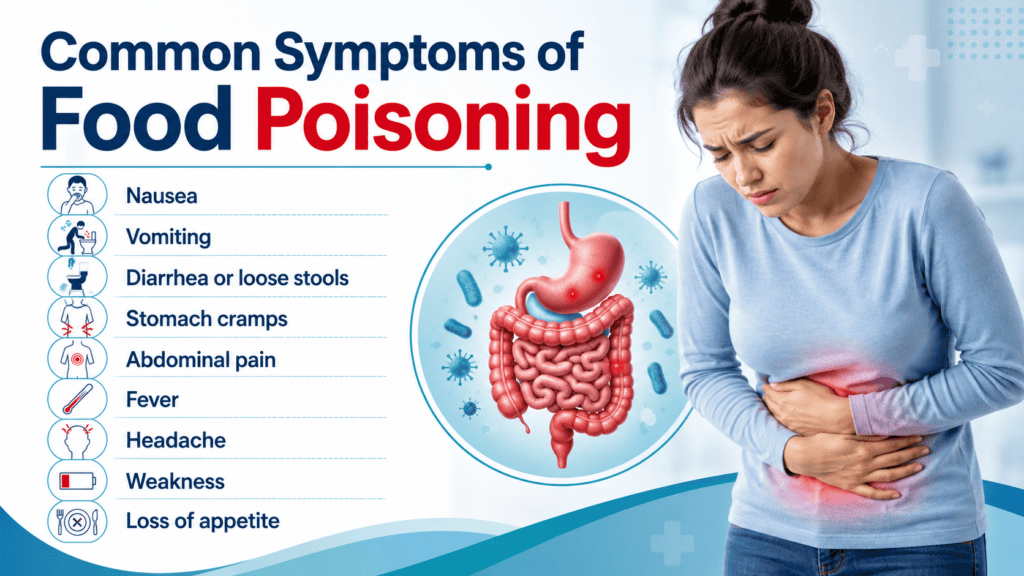
Common Symptoms
- Nausea
- Vomiting
- Diarrhea or loose stools
- Stomach cramps
- Abdominal pain
- Fever
- Headache
- Weakness
- Loss of appetite
Warning Signs That Need Medical Attention
- Blood in the stool
- Persistent vomiting that prevents drinking fluids
- Severe dehydration
- High fever
- Severe abdominal pain
- Confusion or dizziness
- Symptoms lasting more than three days
| Mild Symptoms | Severe Symptoms |
| Nausea | Bloody diarrhea |
| Vomiting | Severe dehydration |
| Mild diarrhea | Persistent vomiting |
| Stomach cramps | High fever |
| Temporary weakness | Severe abdominal pain |
Clinical Insight
Frequent diarrhea and vomiting can quickly lead to dehydration. If you notice reduced urination, extreme thirst, dizziness, or dry mouth, seek medical evaluation as these may indicate significant fluid loss.
What Causes Food Poisoning?
Food poisoning occurs when harmful microorganisms or toxins contaminate food before it is eaten. Contamination can happen during food production, transportation, preparation, or storage. Poor hygiene, inadequate cooking, improper refrigeration, and cross-contamination between raw and cooked foods are among the most common reasons food becomes unsafe to eat.
The organisms responsible for food poisoning vary across different foods and environments. Bacteria are one of the leading causes, but viruses and parasites can also trigger foodborne illness. Understanding these causes can help reduce the risk of infection and promote safer food handling practices.
Common Causes of Food Poisoning
Bacteria
- Salmonella
- Escherichia coli (E. coli)
- Campylobacter
- Listeria monocytogenes
- Staphylococcus aureus
Viruses
- Norovirus
- Rotavirus
Parasites
- Giardia
- Cryptosporidium
Foods Commonly Associated With Food Poisoning
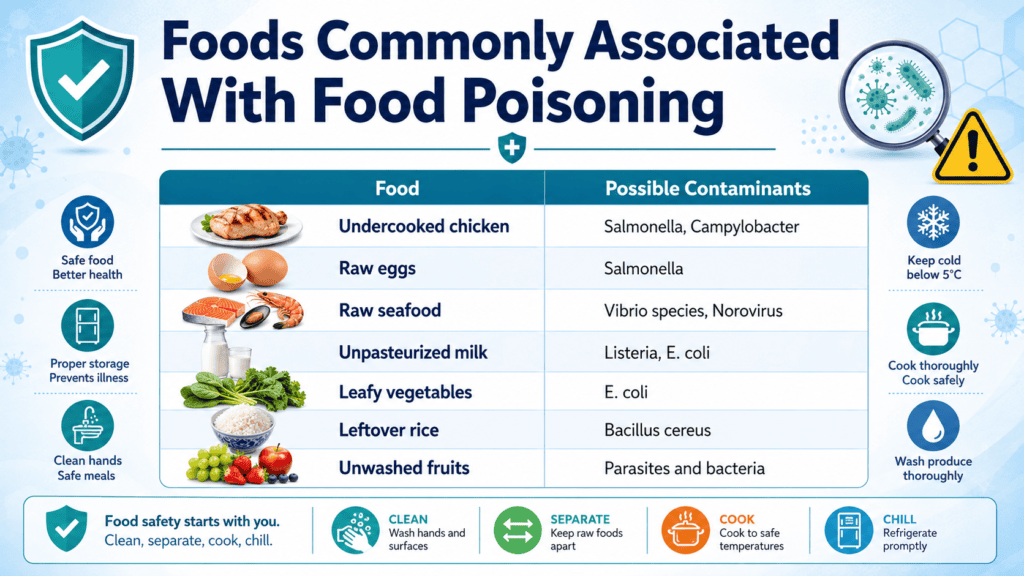
| Food | Possible Contaminants |
| Undercooked chicken | Salmonella, Campylobacter |
| Raw eggs | Salmonella |
| Raw seafood | Vibrio species, Norovirus |
| Unpasteurized milk | Listeria, E. coli |
| Leafy vegetables | E. coli |
| Leftover rice | Bacillus cereus |
| Unwashed fruits | Parasites and bacteria |
Food Safety Tip
Wash your hands before preparing food, cook meat thoroughly, avoid consuming raw or expired foods, refrigerate leftovers promptly, and use separate cutting boards for raw meat and ready-to-eat foods to reduce the risk of food poisoning.
How Is Food Poisoning Treated?
The treatment for food poisoning depends on the cause of the infection, the severity of symptoms, and the patient’s overall health. Most mild cases improve within a few days with adequate rest, proper hydration, and simple dietary adjustments. Since diarrhea and vomiting can lead to significant fluid loss, preventing dehydration is the most important part of treatment.
People with severe dehydration, persistent vomiting, bloody diarrhea, or high fever may require medical evaluation and additional treatment. In some cases, laboratory tests may be needed to identify the cause of the infection, especially if symptoms are prolonged or severe. Antibiotics are not routinely recommended for every case of food poisoning because many infections improve without them, and unnecessary antibiotic use may do more harm than good.
Home Care for Mild Food Poisoning
Most people recover safely at home by following these measures:
- Drink plenty of water throughout the day.
- Use Oral Rehydration Solution (ORS) to replace lost fluids and electrolytes.
- Eat small, light meals once vomiting has settled.
- Get adequate rest to help your body recover.
- Avoid alcohol and smoking until symptoms resolve.
Doctor’s Tip
If you cannot keep fluids down for several hours or notice signs of dehydration such as dizziness, dry mouth, or reduced urination, seek medical attention immediately.
Medical Treatment
A gastroenterologist may recommend medical treatment if symptoms are severe or complications develop. The treatment plan depends on the underlying cause and the patient’s condition.
| Treatment | When It May Be Needed |
| ORS | Mild dehydration |
| Intravenous (IV) fluids | Severe dehydration or inability to drink fluids |
| Anti-nausea medication | Persistent vomiting |
| Antibiotics | Selected bacterial infections only |
| Hospital admission | Severe illness, elderly patients, infants, or weakened immunity |
Clinical Insight
Self-medicating with antibiotics without medical advice is not recommended. Many cases of food poisoning are caused by viruses or toxins, where antibiotics offer no benefit.
What to Eat After Food Poisoning
As symptoms begin to improve, choosing the right foods can help your digestive system recover. The stomach and intestines may remain sensitive for a few days, so starting with simple, easily digestible foods is usually the best approach. Eating small portions more frequently may also be more comfortable than consuming large meals.
Hydration remains just as important during recovery as it is during the illness. Along with water, fluids such as ORS, clear soups, and coconut water can help replace lost electrolytes. Gradually returning to a normal diet is recommended once symptoms have resolved.
Foods That Are Usually Easy to Digest
- Bananas
- Plain rice
- Applesauce
- Toast
- Khichdi
- Plain boiled potatoes
- Oatmeal
- Clear vegetable soup
- Coconut water
- ORS
Foods to Avoid During Recovery
These foods may irritate the digestive system and worsen symptoms:
- Fried and oily foods
- Spicy foods
- Alcohol
- Coffee and energy drinks
- Carbonated beverages
- Highly processed foods
- Very sugary foods
| Recommended Foods | Foods to Avoid |
| Rice | Fried foods |
| Bananas | Spicy meals |
| Toast | Alcohol |
| Khichdi | Coffee |
| Soup | Soft drinks |
| ORS | Junk food |
Nutrition Tip
Resume your regular diet gradually. If symptoms return after eating certain foods, discuss them with your healthcare provider instead of eliminating multiple food groups on your own.
How Long Does Food Poisoning Last?
The recovery time varies depending on the type of infection, the amount of contaminated food consumed, and the individual’s overall health. Mild cases often improve within one to three days, while bacterial or parasitic infections may take longer and sometimes require medical treatment.
Some people may continue to experience temporary digestive discomfort even after the infection has cleared. Drinking enough fluids, eating a balanced diet, and allowing the digestive system time to recover usually helps symptoms improve.
| Cause | Symptoms May Begin | Typical Recovery |
| Viral infections | 12–48 hours | 1–3 days |
| Bacterial infections | 6–72 hours | 2–7 days |
| Parasitic infections | Several days | Days to weeks |
Recovery Note
If diarrhea continues for more than three days, symptoms worsen instead of improving, or dehydration develops, consult a gastroenterologist for further evaluation.
Food Poisoning vs Stomach Flu
Food poisoning and viral gastroenteritis (often called the stomach flu) share many symptoms, including nausea, vomiting, diarrhea, and stomach cramps. However, they have different causes. Food poisoning usually results from eating contaminated food or drinking contaminated water, while the stomach flu is caused by viral infections that spread from person to person.
Although both conditions often improve with supportive care, identifying the likely cause helps determine the appropriate management and reduces the risk of spreading infection.
| Feature | Food Poisoning | Stomach Flu |
| Cause | Contaminated food or water | Viral infection |
| Onset | Often sudden | Usually gradual |
| Spread | Usually not person-to-person | Easily spreads between people |
| Common Trigger | Eating contaminated food | Contact with an infected person |
| Treatment | Hydration and supportive care | Hydration and supportive care |
How to Prevent Food Poisoning
Many cases of food poisoning can be prevented by following safe food handling and hygiene practices. Proper cooking, storage, and cleaning significantly reduce the risk of harmful bacteria or viruses contaminating food. Whether preparing meals at home or eating outside, paying attention to food safety is one of the most effective ways to protect your digestive health.
Simple habits, such as washing hands before meals and storing leftovers correctly, can make a significant difference. Choosing freshly prepared food and avoiding items that have been left unrefrigerated for long periods also lowers the risk of foodborne illness.
Food Safety Tips
- Wash your hands before preparing or eating food.
- Cook meat, poultry, and seafood thoroughly.
- Wash fruits and vegetables before consumption.
- Refrigerate leftovers promptly.
- Avoid consuming expired or spoiled food.
- Use separate cutting boards for raw and cooked foods.
- Drink clean and safe water.
- Choose hygienic restaurants and food vendors.
Prevention Reminder
Safe food handling is the most effective way to reduce the risk of food poisoning. Maintaining good hygiene at home and while dining out can help protect you and your family from foodborne illnesses.
When Should You See a Doctor for Food Poisoning?
Most cases of food poisoning improve with rest, hydration, and supportive care within a few days. However, some infections can become serious, particularly in young children, older adults, pregnant women, and people with weakened immune systems. Delaying medical care in these situations may increase the risk of dehydration, electrolyte imbalance, or other complications.
If your symptoms are severe, persistent, or accompanied by warning signs such as bloody diarrhea or high fever, consult a gastroenterologist promptly. Early diagnosis helps identify the underlying cause and ensures appropriate treatment, especially when bacterial infections or complications are suspected.
Seek Medical Attention Immediately If You Have:
- Blood in your stool
- Persistent vomiting that prevents drinking fluids
- Severe dehydration (dry mouth, dizziness, reduced urination)
- Fever above 38.5°C (101.3°F)
- Severe or worsening abdominal pain
- Diarrhea lasting more than 3 days
- Confusion, fainting, or extreme weakness
- Symptoms during pregnancy
- Food poisoning in infants or older adults
- A weakened immune system due to illness or medications
Medical Advice
Don’t ignore persistent digestive symptoms. If vomiting, diarrhea, or dehydration continues despite home care, seek medical evaluation to prevent complications and receive appropriate treatment.
Frequently Asked Questions
1. How do I know if I have food poisoning?
Food poisoning usually causes sudden nausea, vomiting, diarrhea, stomach cramps, and sometimes fever after eating contaminated food or drinking contaminated water. Symptoms often begin within a few hours but may take longer depending on the cause.
2. How long does food poisoning usually last?
Most mild cases improve within 24–72 hours. Some bacterial or parasitic infections may last longer and require medical treatment.
3. Can food poisoning go away without medicine?
Yes. Many mild cases recover with rest, hydration, and proper nutrition. However, severe symptoms or dehydration should be evaluated by a doctor.
4. Should I take antibiotics for food poisoning?
Not always. Antibiotics are only helpful for certain bacterial infections and are not effective against viral food poisoning. Taking antibiotics without medical advice is not recommended.
5. What should I drink during food poisoning?
The best options include:
- Water
- Oral Rehydration Solution (ORS)
- Coconut water
- Clear soups
- Electrolyte drinks (if recommended)
These fluids help replace water and minerals lost through vomiting and diarrhea.
6. Can food poisoning be prevented?
Yes. Practicing proper food hygiene, cooking food thoroughly, washing fruits and vegetables, storing leftovers correctly, and drinking clean water significantly reduce the risk of food poisoning.
Key Takeaways
✔ Food poisoning is caused by consuming contaminated food or water.
✔ Common symptoms include nausea, vomiting, diarrhea, stomach cramps, and fever.
✔ Most people recover within a few days with hydration and supportive care.
✔ ORS and adequate fluid intake are essential to prevent dehydration.
✔ Severe symptoms such as bloody diarrhea, persistent vomiting, or high fever require immediate medical attention.
✔ Safe food handling and good hygiene are the best ways to prevent foodborne illness.
Conclusion
Food poisoning is a common digestive illness that can range from mild discomfort to a serious medical condition, depending on the cause and severity of infection. Recognizing the early symptoms, staying well hydrated, and following safe food practices can help most people recover quickly and reduce the risk of complications.
Although many cases improve at home, warning signs such as persistent vomiting, bloody diarrhea, severe dehydration, or high fever should never be ignored. Prompt medical evaluation can help identify the underlying cause and ensure timely treatment, especially for vulnerable individuals such as children, older adults, and pregnant women.
Why Choose Shree Vinayaka Gastro Liver Care?
If you’re experiencing persistent vomiting, diarrhea, severe abdominal pain, dehydration, or recurring digestive problems, expert evaluation can help identify the underlying cause and prevent complications.
At Shree Vinayaka Gastro Liver Care, Dr. Saumyaleen Roy, an experienced gastroenterologist, provides comprehensive care for digestive disorders, including food poisoning, gastroenteritis, IBS, IBD, acid reflux, liver diseases, and other gastrointestinal conditions.
Our Services Include:
- Comprehensive digestive health evaluation
- Diagnosis and treatment of food poisoning and stomach infections
- Advanced endoscopy and colonoscopy
- Personalized dietary guidance
- Management of chronic digestive disorders
- Long-term gastrointestinal care
Don’t ignore persistent digestive symptoms. Schedule a consultation with Dr. Saumyaleen Roy at Shree Vinayaka Gastro Liver Care for expert diagnosis and personalized treatment.
Medical Disclaimer
This article is intended for educational purposes only and should not replace professional medical advice, diagnosis, or treatment. If you have persistent digestive symptoms or suspect severe food poisoning, consult a qualified gastroenterologist for an accurate diagnosis and appropriate care.
Summary:
Food poisoning is a foodborne illness caused by consuming contaminated food or water containing harmful bacteria, viruses, parasites, or toxins. It commonly causes nausea, vomiting, diarrhea, stomach cramps, and fever. While most cases resolve with rest and proper hydration, severe symptoms such as bloody diarrhea, persistent vomiting, high fever, or dehydration require immediate medical attention. Safe food handling, proper cooking, and good hygiene are the most effective ways to prevent food poisoning.