
A liver cirrhosis diet focuses on avoiding alcohol, choosing safe and nutritious foods, getting enough protein and calories, and managing sodium intake when medically necessary. People with liver cirrhosis should avoid raw or undercooked foods that may cause infections and follow a meal plan suited to their nutritional needs and liver function.
Cirrhosis causes permanent scarring of the liver, which can interfere with its normal functions. Although diet cannot independently remove established scar tissue, good nutrition can help maintain muscle mass, reduce the risk of malnutrition, and support overall health.
What Is a Liver Cirrhosis Diet?
A liver cirrhosis diet is a nutrition plan that helps people with cirrhosis meet their energy and protein needs while avoiding foods that can cause additional harm. It emphasizes balanced meals, adequate calories, appropriate sodium intake, and safe food preparation. The exact plan depends on the severity of cirrhosis, appetite, body weight, muscle mass, and other medical conditions.
Cirrhosis can affect how the body stores and uses energy. Some people eat less because of nausea, poor appetite, or feeling full quickly, while others lose muscle even when their body weight appears normal. These problems can contribute to malnutrition. A registered dietitian who understands liver disease can help create a practical meal plan using familiar foods such as dal, roti, rice, vegetables, curd, eggs, or fish, depending on the person’s needs and preferences.
What Foods Should You Avoid With Liver Cirrhosis?
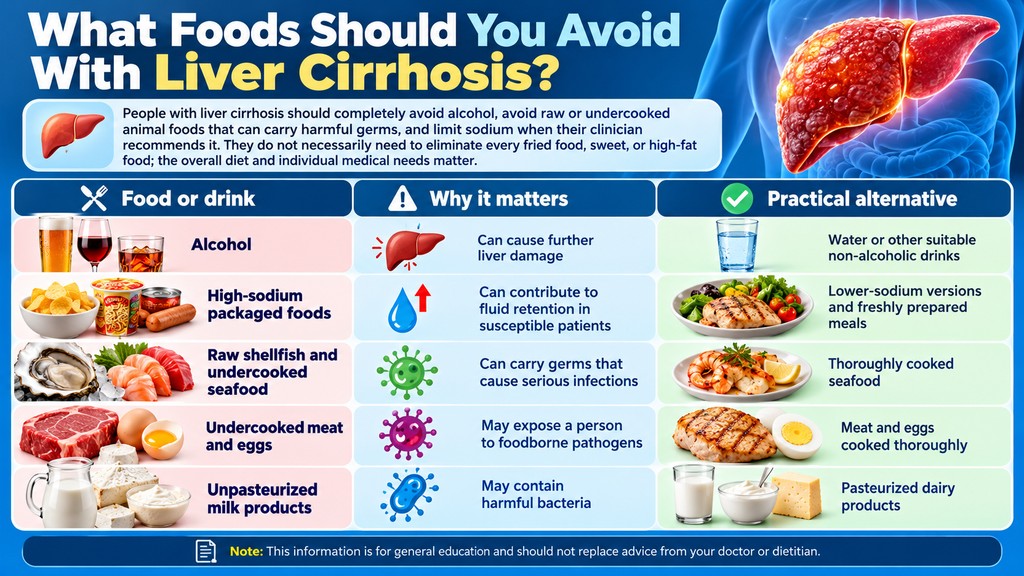
People with liver cirrhosis should completely avoid alcohol, avoid raw or undercooked animal foods that can carry harmful germs, and limit sodium when their clinician recommends it. They do not necessarily need to eliminate every fried food, sweet, or high-fat food; the overall diet and individual medical needs matter.
| Food or drink | Why it matters | Practical alternative |
| Alcohol | Can cause further liver damage | Water or other suitable non-alcoholic drinks |
| High-sodium packaged foods | Can contribute to fluid retention in susceptible patients | Lower-sodium versions and freshly prepared meals |
| Raw shellfish and undercooked seafood | Can carry germs that cause serious infections | Thoroughly cooked seafood |
| Undercooked meat and eggs | May expose a person to foodborne pathogens | Meat and eggs cooked thoroughly |
| Unpasteurized milk products | May contain harmful bacteria | Pasteurized dairy products |
Alcohol
People with liver cirrhosis should avoid alcohol completely. Beer, wine, and spirits can all expose the liver to alcohol, so switching from one alcoholic drink to another does not make drinking safe. Avoiding alcohol is an important part of preventing further alcohol-related liver injury, regardless of whether alcohol originally caused the cirrhosis.
Practical steps include checking drink labels, avoiding alcohol-containing beverages, and asking a healthcare professional for help if stopping alcohol is difficult. Do not replace alcoholic drinks with herbal products marketed as liver cleansers; some supplements can themselves harm the liver.
High-Sodium and Processed Foods
People who need to control fluid retention may need to reduce sodium, especially from packaged and processed foods. Common sources include instant noodles, salty namkeen, chips, pickles, papad, packaged soups, processed meats, and salty sauces. Sodium content varies, so reading food labels is more reliable than judging a product by taste alone.
For everyday meals, consider these options:
- Prepare dal, vegetables, and other dishes with less added salt when advised.
- Compare sodium levels on packaged-food labels.
- Use lemon, herbs, garlic, ginger, and suitable spices to add flavor.
- Ask the treating clinician whether a sodium restriction is necessary and how strict it should be.
Raw or Undercooked Foods
People with cirrhosis should avoid raw or undercooked shellfish, fish, and meat, as well as unpasteurized milk and milk products. Cirrhosis can increase vulnerability to serious infections, making food safety particularly important.
Follow basic food-safety practices:
- Cook meat, fish, shellfish, and eggs thoroughly.
- Choose pasteurized milk, curd, and other dairy products.
- Wash fruits and vegetables under clean running water.
- Keep raw meat separate from cooked food.
- Refrigerate perishable food promptly and avoid food that has been stored unsafely.
What Foods Can You Eat With Liver Cirrhosis?
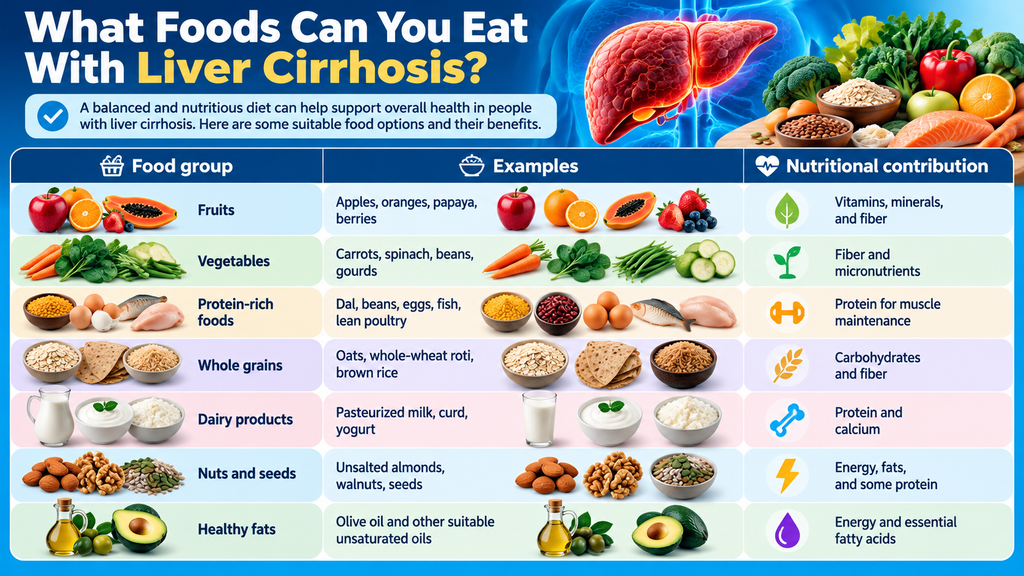
Most people with liver cirrhosis need a balanced diet that provides enough calories, protein, vitamins, minerals, and other nutrients. Suitable choices can include fruits, vegetables, whole grains, pulses, dairy products, eggs, fish, poultry, nuts, and unsaturated fats. Portions and food choices should match the person’s nutritional status and any medical restrictions.
The following table gives practical examples. These foods are options, not a mandatory diet; allergies, diabetes, kidney problems, appetite, and individual treatment plans may change what is appropriate.
| Food group | Examples | Nutritional contribution |
| Fruits | Apples, oranges, papaya, berries | Vitamins, minerals, and fiber |
| Vegetables | Carrots, spinach, beans, gourds | Fiber and micronutrients |
| Protein-rich foods | Dal, beans, eggs, fish, lean poultry | Protein for muscle maintenance |
| Whole grains | Oats, whole-wheat roti, brown rice | Carbohydrates and fiber |
| Dairy products | Pasteurized milk, curd, yogurt | Protein and calcium |
| Nuts and seeds | Unsalted almonds, walnuts, seeds | Energy, fats, and some protein |
| Healthy fats | Olive oil and other suitable unsaturated oils | Energy and essential fatty acids |
Fruits and Vegetables
Fruits and vegetables can help provide fiber, vitamins, and minerals in a liver cirrhosis diet. Choose a variety of fresh or safely prepared produce rather than relying on a single fruit or vegetable. Whole fruit is generally a useful everyday option, while people with specific blood sugar or kidney-related restrictions may need individualized guidance.
For example, meals can include cooked vegetables with roti, fruit with breakfast, or vegetables added to dal and rice. Wash produce properly and follow any food-safety advice given by the care team. No single fruit or vegetable can reverse cirrhosis or replace medical treatment.
Protein-Rich Foods
Protein-rich foods help people with cirrhosis maintain muscle mass and reduce the risk of muscle wasting. Suitable sources may include dal, chickpeas, beans, tofu, eggs, pasteurized dairy products, fish, and lean poultry. A person’s protein requirement depends on factors such as body weight, nutritional status, and illness severity.
A practical approach is to include a protein source at meals and snacks instead of relying mainly on rice, roti, or other carbohydrates. People with hepatic encephalopathy should not automatically restrict protein; current liver nutrition guidance generally recommends maintaining adequate protein intake under clinical supervision.
Whole Grains, Dairy, and Healthy Fats
Whole grains, suitable dairy products, and healthy fats can help provide the energy and nutrients needed by people with cirrhosis. Oats, whole-wheat roti, rice, pasteurized milk, curd, and unsaturated oils can fit into a balanced eating plan. Whole grains provide carbohydrates and fiber, while dairy can provide protein and calcium.
People who struggle to eat enough may need energy-dense foods or snacks rather than unnecessarily restrictive meals. Choose products with sodium levels appropriate to your care plan, and avoid unpasteurized dairy products. If appetite or weight is falling, ask a clinician or dietitian to assess whether the current diet supplies enough calories and protein.
How Much Protein and Sodium Should You Consume With Liver Cirrhosis?
Many adults with cirrhosis need around 1.2–1.5 grams of protein per kilogram of ideal body weight daily, while sodium intake should be adjusted to their clinical needs. These are general clinical nutrition targets, not a personal prescription. A clinician or liver-disease dietitian should individualize the plan, particularly if the person has fluid retention, kidney problems, poor appetite, or significant malnutrition.
Protein restriction is not routinely recommended, even for people with hepatic encephalopathy. Sodium restriction may help people with fluid retention, but an unnecessarily restrictive diet can make food less appealing and reduce calorie intake. The goal is to balance symptom management with adequate nutrition.
| Nutrient | General guidance | What to discuss with your clinician |
| Protein | Often 1.2–1.5 g/kg of ideal body weight daily for stable adults with cirrhosis | Your weight, muscle mass, and nutritional status |
| Sodium | Reduce intake when clinically indicated, particularly with fluid retention | Your individual sodium target |
| Calories | Provide enough energy to prevent unwanted weight and muscle loss | Appetite, activity, weight changes, and nutritional needs |
| Vitamins and minerals | Assess deficiencies and supplement when indicated | Whether testing or a specific supplement is necessary |
Do not start high-dose vitamin supplements, herbal remedies, or protein powders without medical advice. Some products contain ingredients that may harm the liver or interact with prescribed medicines.
What Is a Sample Liver Cirrhosis Diet Plan?
A sample liver cirrhosis diet plan can include regular meals, protein sources, vegetables, whole grains, and snacks throughout the day. The following is an illustrative Indian-style menu, not a prescribed diet for every patient. Portions, salt, fluid intake, and food choices must be adjusted to the individual’s condition and nutritional requirements.
| Meal | Illustrative food options | Main purpose |
| Breakfast | Oats with pasteurized milk, or eggs with roti | Energy and protein |
| Mid-morning snack | A washed fruit and a suitable portion of unsalted nuts | Nutrients and additional energy |
| Lunch | Roti or rice, dal, cooked vegetables, and curd | Carbohydrates, protein, and micronutrients |
| Evening snack | Yogurt, a suitable sandwich, or another protein-containing snack | Helps meet daily nutritional needs |
| Dinner | Roti or rice with cooked vegetables and dal, tofu, fish, or lean chicken | A balanced evening meal |
| Bedtime snack | Milk with oats, yogurt, or another suitable carbohydrate-and-protein snack | Helps reduce prolonged overnight fasting |
This menu illustrates food combinations, not fixed serving sizes. A person with poor appetite may need smaller, more frequent meals, while someone with diabetes, kidney disease, or other complications may require different choices. A dietitian can calculate individual calorie and protein needs rather than relying on a generic meal plan.
What Eating Habits Are Recommended for Liver Cirrhosis?
People with cirrhosis should avoid prolonged fasting and aim to meet their nutritional needs through regular meals and snacks. Liver disease can change how the body stores and uses energy, so long gaps between meals may make it harder to maintain muscle and adequate nutrition.
Useful habits include:
- Eat smaller, more frequent meals if large meals feel uncomfortable.
- Consider eating every three to four hours while awake, if suitable for your routine.
- Include a bedtime snack or an early breakfast to reduce overnight fasting.
- Include protein-rich foods across the day.
- Monitor unintentional weight loss and declining appetite.
- Follow food-safety practices and any individualized sodium recommendations.
- Review supplements and herbal products with your treating clinician.
If you regularly cannot finish meals, lose weight without trying, or notice declining strength, tell your healthcare team. These changes may indicate inadequate nutrition and deserve assessment rather than simply removing more foods from the diet.
Frequently Asked Questions About Liver Cirrhosis Diet
Can People With Liver Cirrhosis Eat Sugar and Sweets?
People with cirrhosis do not automatically need to eliminate all sugar, but sweets should fit into a balanced diet. Frequent large portions of sugary foods can displace protein-rich and nutrient-dense foods, and people who also have diabetes may need additional dietary planning. Ask your clinician or dietitian how sweets fit your nutritional requirements.
Can People With Liver Cirrhosis Drink Tea or Coffee?
Tea and coffee may fit into a liver cirrhosis diet for many people, depending on individual tolerance, caffeine sensitivity, sleep, and other medical conditions. Avoid adding excessive sugar, and do not use these drinks as substitutes for nutritious meals. Ask your clinician if you have specific restrictions or symptoms that worsen after drinking them.
Can People With Liver Cirrhosis Eat Spicy Food?
Spicy food is not universally prohibited for people with cirrhosis. If chilli or strong spices trigger heartburn, nausea, or discomfort, reduce the amount or choose milder preparations. The more important priorities are adequate nutrition, safe food preparation, alcohol avoidance, and following any prescribed dietary restrictions.
Are Protein Supplements Safe for People With Liver Cirrhosis?
Protein supplements may help some people who cannot meet their needs through food, but they are not necessary for everyone. Check the product and its ingredients with your clinician or dietitian before starting it. Avoid unverified products marketed as liver detoxifiers or muscle-building supplements, and do not restrict dietary protein without medical guidance.
Can Diet Reverse Liver Cirrhosis?
Diet alone cannot reliably reverse established liver scarring. Good nutrition can help prevent malnutrition, maintain muscle mass, and support overall health, while treatment of the underlying cause may slow progression or improve some aspects of liver function. People with cirrhosis should follow their medical treatment plan and attend regular follow-up appointments.
Conclusion
A liver cirrhosis diet should provide enough calories and protein, avoid alcohol, reduce foodborne infection risks, and manage sodium when clinically necessary. Fruits, vegetables, whole grains, suitable dairy products, and varied protein sources can help people meet their nutritional needs.
There is no single diet that suits everyone with cirrhosis. Work with a treating clinician or registered dietitian to personalize meals, review supplements, and respond to changes in appetite, weight, muscle strength, or fluid retention.