

How do I know if my stomach problem is serious? Pay attention to the severity of your pain, how it develops and whether other symptoms appear. Sudden severe abdominal pain, vomiting blood, black tarry stools or fainting can indicate an emergency. Mild discomfort may have a less serious cause, but pain intensity alone cannot reliably determine how dangerous a condition is.
Stomach discomfort can result from gas, constipation, acid reflux, infections or other digestive conditions. Some problems need only simple care while others require medical investigation. The key is to recognise warning signs, understand when to seek help and avoid treating recurring symptoms without knowing their cause.
1. What Are the Common Symptoms of Stomach Problems?
Common digestive symptoms include abdominal pain, bloating, nausea, vomiting, heartburn and changes in bowel movements. You might experience discomfort after eating or notice symptoms that come and go throughout the day. Occasional symptoms do not automatically indicate a serious condition. However, repeated discomfort deserves attention when it affects eating, sleep or everyday activities.
Other symptoms include excessive burping, abdominal swelling and feeling full after eating only a small amount. These symptoms may occur with indigestion or other digestive conditions. The NIDDK guide to indigestion explains common symptoms and possible causes. A symptom alone cannot confirm a diagnosis, so look at the complete pattern rather than one isolated sign.
What Details Should You Notice About Your Symptoms?
Pay attention to where the pain starts, whether it spreads and how long it lasts. Notice whether it occurs before meals, after eating or during bowel movements. Record associated symptoms such as vomiting, appetite changes or diarrhoea. These details can help a healthcare professional understand the problem and decide whether further investigation is needed.
2. What Are the Warning Signs of a Serious Stomach Problem?
Some symptoms require emergency medical assessment. These include sudden severe abdominal pain, vomiting blood, black tarry stools and an abdomen that becomes rigid or extremely tender. Abdominal pain accompanied by chest pain, breathing difficulty or fainting can also signal a serious problem. Do not delay emergency care to try home remedies. MedlinePlus explains when abdominal pain requires immediate medical attention.
Other symptoms may require prompt medical evaluation even when they are not emergencies. These include difficulty swallowing, persistent vomiting, unexplained weight loss and ongoing abdominal swelling. Such symptoms do not always indicate a dangerous illness, but they should not be ignored. If your condition worsens or you develop a new warning sign, seek medical advice rather than continuing to self-treat.
Which Symptoms Require Immediate Medical Help?
Seek emergency care if you experience any of the following:
- Sudden or severe abdominal pain.
- Vomiting blood or material resembling coffee grounds.
- Black, tarry stools or significant bloody stools.
- Severe abdominal pain with fainting or breathing difficulty.
- A rigid or extremely tender abdomen with worsening pain.
- Inability to pass stool or gas accompanied by vomiting and abdominal swelling.
Do not wait for several symptoms to occur together. One serious warning sign may be enough to require urgent assessment.
3. How Can You Decide What to Do About Stomach Pain?
The right response depends on your symptoms and their progression. Mild discomfort that improves may not require emergency treatment. Recurring pain, persistent vomiting or unexplained changes in appetite deserve medical assessment. Sudden severe pain and signs of bleeding require urgent attention. There is no universal waiting period that is safe for every person.
Use the following table as a general guide. It is not a diagnostic tool and should not override medical advice.
| Symptom pattern | Recommended action |
| Mild discomfort that improves and has no warning signs | Monitor symptoms and use appropriate self-care |
| Pain that repeatedly returns or does not improve | Arrange a medical appointment |
| Persistent vomiting or difficulty maintaining hydration | Seek prompt medical assessment |
| Unexplained weight loss or difficulty swallowing | Arrange a medical evaluation |
| Sudden severe pain, vomiting blood or black tarry stools | Seek emergency care |
| Abdominal pain with fainting, chest pain or breathing difficulty | Seek emergency care immediately |
How Should You Prepare for a Doctor’s Appointment?
Follow these steps to make your appointment more useful.
- Record the pain location. Note whether it affects the upper abdomen, lower abdomen or one particular side.
- Track the timing. Write down when symptoms begin and how long they last.
- Note possible triggers. Record relevant meals, medicines and activities without assuming they caused the problem.
- List associated symptoms. Include vomiting, bowel changes, fever, appetite loss or weight changes.
- Bring your medication list. Include prescribed medicines, over-the-counter products and supplements.
This information can help your doctor decide which questions, examinations or tests are appropriate.
4. What Causes Stomach Problems That Do Not Go Away?
Persistent abdominal discomfort has many possible causes. Gastroesophageal reflux disease (GERD) occurs when stomach contents repeatedly flow back into the oesophagus. Gastritis involves inflammation of the stomach lining, while peptic ulcers are sores in the stomach or upper small intestine. These conditions may share symptoms but differ in their causes and treatment.
Other possibilities include irritable bowel syndrome (IBS), gastrointestinal infections, gallstones and pancreatic disorders. Some medicines can also contribute to digestive symptoms. Nonsteroidal anti-inflammatory drugs such as ibuprofen may increase the risk of stomach ulcers and bleeding. The location and pattern of pain can provide useful clues, but neither can establish a diagnosis on its own.
How Do Common Digestive Conditions Differ?
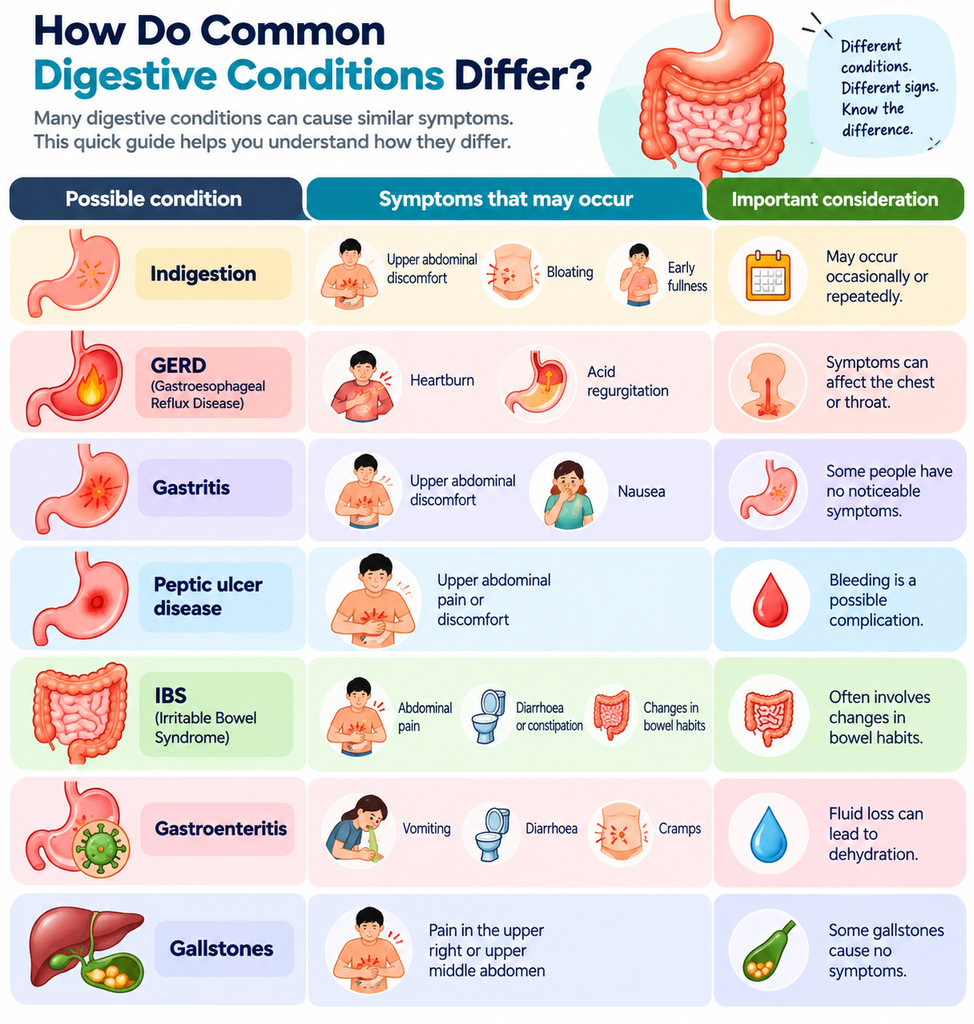
| Possible condition | Symptoms that may occur | Important consideration |
| Indigestion | Upper abdominal discomfort, bloating and early fullness | May occur occasionally or repeatedly |
| GERD | Heartburn and acid regurgitation | Symptoms can affect the chest or throat |
| Gastritis | Upper abdominal discomfort and nausea | Some people have no noticeable symptoms |
| Peptic ulcer disease | Upper abdominal pain or discomfort | Bleeding is a possible complication |
| IBS | Abdominal pain, diarrhoea or constipation | Often involves changes in bowel habits |
| Gastroenteritis | Vomiting, diarrhoea and cramps | Fluid loss can lead to dehydration |
| Gallstones | Pain in the upper right or upper middle abdomen | Some gallstones cause no symptoms |
These patterns are general examples rather than a way to diagnose yourself. Different conditions can produce similar symptoms, and some serious illnesses may initially cause mild discomfort.
5. How Do Doctors Diagnose Persistent Digestive Symptoms?
Doctors usually begin by reviewing your symptoms, medical history and medicines. They may examine your abdomen for tenderness or swelling. Depending on the findings, they may recommend blood tests, stool tests or imaging. Not everyone with stomach discomfort needs a scan or endoscopy. The choice of investigation depends on the suspected cause and the clinical assessment.
A complete blood count may help identify anaemia or signs of infection. Stool tests can investigate certain infections or gastrointestinal bleeding. An abdominal ultrasound may help assess the gallbladder and other organs. An upper gastrointestinal endoscopy allows a specialist to examine the oesophagus, stomach and duodenum. A colonoscopy examines the colon and rectum when lower digestive tract problems are suspected.
Which Tests May Help Identify the Cause?
| Test | What it may help investigate |
| Blood tests | Anaemia, infection or other abnormalities |
| Stool tests | Certain infections or gastrointestinal bleeding |
| Abdominal ultrasound | Gallstones and selected abdominal conditions |
| CT scan | Certain causes of acute or persistent abdominal pain |
| Upper GI endoscopy | Conditions affecting the oesophagus, stomach and duodenum |
| Colonoscopy | Conditions affecting the colon and rectum |
Your doctor may recommend one or more tests based on your symptoms. Some problems can be assessed through medical history and examination alone while others require further investigation.
6. What Can You Do at Home for Mild Stomach Problems?
For mild digestive discomfort, drink enough fluids and try smaller meals if large portions worsen your symptoms. Choose foods you tolerate well and note whether particular meals trigger discomfort. If you experience acid reflux, avoid lying down immediately after eating. These measures may help relieve some symptoms but cannot treat every underlying condition.
Avoid taking antibiotics without a prescription or repeatedly using painkillers without medical advice. Some medicines can irritate the stomach or increase bleeding risk. If vomiting or diarrhoea makes it difficult to maintain hydration, seek medical advice. Do not rely on home remedies when symptoms persist, worsen or develop alongside warning signs.
Which Habits May Help Reduce Recurring Discomfort?
- Eat regular meals and avoid portions that consistently worsen symptoms.
- Drink adequate fluids throughout the day.
- Record possible food triggers rather than unnecessarily eliminating entire food groups.
- Avoid unnecessary medication use and discuss recurring symptoms with a healthcare professional.
- Maintain regular sleep and physical activity where possible.
These habits may support digestive health, but they do not prevent every digestive disease or replace appropriate medical treatment.
7. When Should You Consult a Gastroenterologist?
A gastroenterologist specialises in conditions affecting the digestive system and related organs, including the liver and pancreas. A consultation may be appropriate for persistent abdominal discomfort, recurring reflux, ongoing bowel changes or unexplained weight loss. A general physician can also assess your symptoms and determine whether specialist care is needed.
Meet Dr. Saumyaleen Roy, Gastroenterologist in Varanasi
Dr. Saumyaleen Roy is a gastroenterologist and liver specialist associated with Shree Vinayaka Gastro Liver Care in Varanasi. According to his official profile, he completed his MD in Medicine at the Institute of Medical Sciences, Banaras Hindu University (IMS BHU), followed by a DM in Gastroenterology at IGIMS Patna, where he received a Gold Medal. His profile also describes fellowship training in advanced endoscopic procedures, including Endoscopic Ultrasound (EUS), Endoscopic Retrograde Cholangiopancreatography (ERCP) and Third Space Endoscopy.
Patients experiencing recurring digestive symptoms can discuss their concerns with a qualified healthcare professional rather than relying on online information to diagnose themselves.
Clinic: Shree Vinayaka Gastro Liver Care, Satya Complex, opposite Dress Land, Gurudham Chauraha, Varanasi.
Website: drsaumyaleenroy.in
Editorial transparency: This article has not been represented as personally reviewed or approved by Dr. Roy. A medical review credit should be added only after he has genuinely reviewed and approved the content.
Frequently Asked Questions About Serious Stomach Problems
Can a Serious Stomach Problem Occur Without a Fever?
Yes. Some digestive conditions cause pain, bloating, bleeding or appetite changes without fever. The absence of fever does not rule out a serious illness. Seek medical advice if symptoms persist or warning signs develop.
Why Does My Stomach Hurt When I Have Not Eaten?
Pain on an empty stomach can occur with indigestion, acid-related conditions or peptic ulcers. However, the timing of pain cannot reliably identify the cause. If discomfort repeatedly occurs before meals or wakes you at night, discuss it with a healthcare professional.
Why Do I Feel Full After Eating Only a Small Amount?
Feeling full unusually quickly is known as early satiety. It can occur with indigestion and other digestive conditions. If it persists or occurs alongside vomiting, appetite loss or unexplained weight loss, seek medical assessment.
Can Stress Cause Stomach Pain Every Day?
Stress can influence the gut-brain connection and may worsen digestive symptoms in some people. Conditions such as IBS can involve abdominal pain and changes in bowel habits. Daily discomfort still deserves assessment because stress may not be the only contributing factor.
Can Painkillers Cause Stomach Problems?
Yes. Medicines such as ibuprofen can irritate the stomach and increase the risk of ulcers or bleeding. Seek medical advice if you develop persistent digestive symptoms while taking these medicines. Vomiting blood or passing black tarry stools requires urgent medical attention.
Why Do I Have Stomach Pain Along With Back Pain?
Abdominal pain that spreads to the back can have several causes, including certain pancreatic or gallbladder conditions. The location alone cannot establish a diagnosis. Sudden severe pain or pain accompanied by repeated vomiting or fainting requires urgent assessment.
Can Frequent Indigestion Be a Sign of Something Serious?
Frequent indigestion can occur with reflux, ulcers, medication effects or functional dyspepsia. Persistent symptoms deserve medical evaluation, especially when accompanied by difficulty swallowing, repeated vomiting or unexplained weight loss. Indigestion does not automatically mean a dangerous condition is present.
Which Doctor Should I Consult for Recurring Stomach Problems?
A general physician can assess your symptoms and recommend the next steps. A gastroenterologist specialises in digestive conditions and may be appropriate for persistent or complicated problems. Seek emergency care rather than waiting for a routine appointment if severe warning signs develop.
Final Thoughts: How Do I Know If My Stomach Problem Is Serious?
If you are wondering whether your stomach discomfort is serious, focus on its severity, progression and accompanying symptoms. Mild discomfort may improve with simple measures, but persistent symptoms deserve medical assessment. Sudden severe pain, vomiting blood, black tarry stools or fainting require urgent attention.
Keep a record of your symptoms and share it with your healthcare professional. Online information can help you recognise warning signs, but it cannot replace an individual medical evaluation. Timely assessment can help identify the cause and guide appropriate treatment.