

Frequent bloating after meals, constipation that keeps returning, or unexplained changes in your bowel habits can make everyday life uncomfortable. You might blame something you ate and expect the problem to settle on its own. But when digestive symptoms keep coming back, it is worth understanding what could be causing them.
The 10 possible signs of an unhealthy gut include frequent bloating, abdominal discomfort, constipation, diarrhea, unexplained weight loss, food intolerance, persistent fatigue, changes in stool, and digestive symptoms associated with other health problems. Some symptoms, such as skin problems or poor sleep, may occur alongside digestive issues but are not reliable signs of an unhealthy gut on their own.
Your gut contains a community of microorganisms called the gut microbiome. These microorganisms interact with your digestive system, but symptoms alone cannot tell you whether your gut bacteria are imbalanced.
In this article, we explain the common signs of an unhealthy gut, their possible causes, how doctors investigate digestive problems, and when you should seek medical advice.
What Is an Unhealthy Gut?
An unhealthy gut is a general term used to describe problems affecting digestion, bowel function, or intestinal health. It is not a single medical diagnosis.
Your gastrointestinal tract breaks down food, absorbs nutrients, and moves waste through the digestive system. It also contains trillions of microorganisms, including bacteria, fungi, and other microbes. Together, they form the gut microbiome.
An alteration in the composition or function of these microorganisms is sometimes called gut dysbiosis. However, not every change in the microbiome causes illness, and there is no single symptom that confirms dysbiosis.
Digestive symptoms may instead be related to conditions such as irritable bowel syndrome (IBS), lactose intolerance, celiac disease, gastrointestinal infections, or inflammatory bowel disease (IBD).
That distinction matters: the aim is not simply to label your gut as healthy or unhealthy, but to understand why your symptoms are occurring.
What Are the 10 Signs of an Unhealthy Gut?
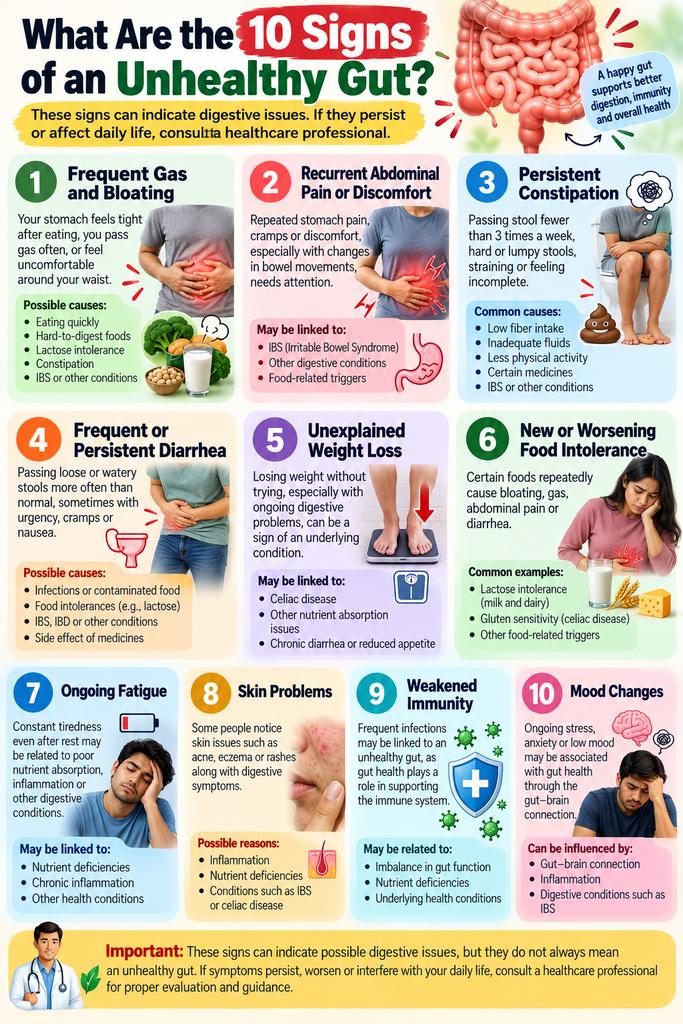
The most useful clues usually come from persistent changes in digestion and bowel movements. Other symptoms may provide additional context, but they need to be interpreted carefully.
1. Frequent Gas and Bloating
Frequent gas and bloating are among the most common digestive complaints. You may notice that your abdomen feels tight after eating, your clothes feel uncomfortable around your waist, or you pass gas more often than usual.
Bloating can occur when bacteria ferment certain carbohydrates in the intestine, producing gas. It can also happen when stool builds up because of constipation or when the digestive system becomes more sensitive to normal amounts of gas.
Possible causes include:
- Eating quickly or swallowing excess air.
- Consuming foods that are difficult for you to digest.
- Lactose intolerance.
- Constipation.
- Irritable bowel syndrome (IBS).
- Certain gastrointestinal conditions.
For example, if milk repeatedly causes bloating, gas, and diarrhea, lactose intolerance may be worth investigating. These symptoms do not automatically mean that your gut bacteria are unhealthy.
What should you do? Notice when bloating occurs, which foods seem to trigger it, and whether it comes with pain or changes in bowel movements. If symptoms are persistent, worsening, or interfering with daily life, consult a healthcare professional.
2. Recurrent Abdominal Pain or Discomfort
Occasional stomach discomfort can happen after a large meal or during a temporary digestive upset. Repeated abdominal pain, however, deserves closer attention, particularly when it occurs alongside constipation, diarrhea, or bloating.
One possible cause is irritable bowel syndrome. IBS can involve recurring abdominal pain associated with bowel movements and changes in stool frequency or consistency. Other digestive conditions can produce similar symptoms.
The location of the discomfort, its duration, its relationship to meals, and whether passing stool relieves it can help a doctor narrow down the possible causes.
Do not assume that recurring abdominal pain is simply trapped gas or poor gut health.
What should you do? Seek medical advice if the pain keeps returning or affects your routine. Severe or sudden abdominal pain, particularly with bleeding, persistent vomiting, or fainting, requires urgent medical assessment.
3. Persistent Constipation
Constipation involves more than simply missing a bowel movement for a day. It may mean passing stool fewer than three times a week, having hard or lumpy stools, straining, or feeling that you have not emptied your bowel completely.
Common causes include low dietary fiber intake, inadequate fluid intake, reduced physical activity, certain medicines, and changes in routine. Conditions such as IBS can also contribute.
Constipation does not necessarily indicate an imbalance in gut bacteria. The reason it occurs matters more than the label given to it.
What should you do? If appropriate for your health, increase dietary fiber gradually, drink enough fluids, stay active, and maintain a regular toilet routine. Seek medical advice if constipation persists despite self-care or is accompanied by rectal bleeding, unexplained weight loss, vomiting, or ongoing abdominal pain.
4. Frequent or Persistent Diarrhea
Diarrhea means passing loose or watery stools more frequently than normal. It may also cause urgency, abdominal cramps, nausea, and difficulty maintaining adequate hydration.
Short-term diarrhea can occur because of infections, contaminated food, or medication effects. Recurrent or persistent diarrhea may be associated with lactose intolerance, celiac disease, IBS, IBD, or other digestive conditions.
If diarrhea continues, the body can lose substantial amounts of water and electrolytes. Persistent symptoms can also affect nutrient absorption in some conditions.
What should you do? Maintain hydration and seek medical advice if diarrhea persists or repeatedly returns. Blood in the stool, black tarry stools, severe abdominal pain, frequent vomiting, or signs of dehydration need prompt medical attention.
5. Unexplained Weight Loss
Losing weight without deliberately changing your diet or activity level is a symptom worth taking seriously, especially when accompanied by ongoing digestive problems.
Certain conditions, including celiac disease and other disorders affecting the small intestine, can interfere with nutrient absorption. Chronic diarrhea, reduced appetite, and inflammation may also contribute to weight loss.
Unexplained weight gain, in contrast, is not a reliable sign of an unhealthy gut. Weight can change for many reasons, including dietary habits, physical activity, medications, and hormonal conditions.
What should you do? If you are losing weight without trying, arrange a medical assessment rather than attempting to treat the problem with supplements or dietary changes alone. Your doctor can determine whether blood tests, stool tests, or other investigations are appropriate.
6. New or Worsening Food Intolerance
Do certain foods repeatedly cause bloating, gas, abdominal pain, or diarrhea? A recurring pattern may indicate that you have difficulty digesting a particular food component or that another digestive condition needs investigation.
For example, lactose intolerance occurs when the small intestine cannot digest all the lactose in foods such as milk. Symptoms may include bloating, gas, abdominal pain, and diarrhea. The National Institute of Diabetes and Digestive and Kidney Diseases explains the symptoms and diagnosis of lactose intolerance.
Celiac disease is different: it is an immune-mediated condition triggered by gluten that can damage the small intestine.
Food intolerance does not automatically mean that your gut microbiome is imbalanced. Nor is food intolerance the same as a food allergy, which involves an immune response and can sometimes cause severe reactions.
What should you do? Keep a record of the foods you eat, the quantities, and the symptoms that follow. Avoid eliminating several food groups without medical or dietetic guidance. If celiac disease is suspected, consult your doctor before starting a gluten-free diet because doing so can affect test results.
7. Changes in Stool Appearance or Frequency
Your bowel habits can provide useful information about your digestive health. Pay attention to changes in stool consistency, frequency, and appearance, especially if they persist.
For example:
- Hard, dry stools may occur with constipation.
- Loose or watery stools may indicate diarrhea.
- Pale, greasy, bulky stools that are difficult to flush can sometimes occur with problems affecting fat digestion or absorption.
- Blood in the stool requires medical assessment rather than being dismissed as a routine gut-health issue.
Stool appearance alone cannot identify a specific disease. Diet, medication, infections, and several gastrointestinal conditions can change bowel habits.
What should you do? If a change in your usual bowel pattern continues, consult a healthcare professional. Blood in the stool, black tarry stools, or persistent changes accompanied by weight loss should be evaluated promptly.
8. Persistent Fatigue or Low Energy
Feeling tired occasionally is normal. Persistent fatigue, particularly when accompanied by digestive symptoms, may deserve investigation.
Some gastrointestinal conditions can interfere with nutrient absorption. Depending on the underlying problem, this may contribute to iron deficiency, anemia, or other nutritional deficiencies. Chronic diarrhea and inadequate food intake can also affect your energy levels.
However, fatigue is not a specific sign of an unhealthy gut. Poor sleep, stress, thyroid disorders, anemia, and other medical conditions can produce similar symptoms.
What should you do? If tiredness continues despite adequate rest, particularly alongside diarrhea, unexplained weight loss, or reduced appetite, discuss it with your doctor. Blood tests may be appropriate depending on your symptoms and medical history.
9. Digestive Symptoms That Flare Up During Stress
Have you noticed that abdominal discomfort or bowel changes become more noticeable during stressful periods?
The gut and brain communicate through what is known as the gut-brain axis. This two-way communication involves the nervous system and other biological pathways that influence digestive function.
In conditions such as IBS, gut sensitivity and bowel movements can be affected by interactions between the brain and digestive system. Stress may worsen symptoms in some people, although it is not the only cause.
Anxiety, low mood, and difficulty concentrating can also occur for many reasons. They should not automatically be attributed to gut bacteria.
What should you do? Notice whether your symptoms change during stressful periods. Regular sleep, physical activity, and stress-management techniques may help support your overall well-being. If digestive problems continue, a medical assessment can help determine whether an underlying gastrointestinal condition is present.
10. Persistent Heartburn or Acid Reflux
Heartburn is a burning sensation in the chest that can occur when stomach contents move back into the esophagus. You may also experience a sour taste in your mouth or regurgitation, particularly after meals or when lying down.
Occasional heartburn can happen to anyone. Recurrent symptoms may be associated with gastroesophageal reflux disease (GERD), a condition that can require specific management.
Acid reflux is not proof of an unhealthy gut microbiome. It is a distinct digestive problem that should be evaluated according to its frequency, severity, and associated symptoms.
What should you do? Notice whether large meals or lying down soon after eating make symptoms worse. If heartburn occurs frequently, affects your sleep, or does not improve, consult a healthcare professional. Difficulty swallowing, gastrointestinal bleeding, or unexplained weight loss requires medical assessment. Chest pain with possible cardiac symptoms requires emergency evaluation.
When Should You Consult a Gastroenterologist?
Occasional bloating or a temporary change in bowel habits does not necessarily mean you have a serious digestive condition. Persistent, recurring, or worsening symptoms deserve attention.
Consider consulting a gastroenterologist if you experience:
- Recurrent abdominal pain, bloating, or indigestion.
- Constipation or diarrhea that persists or repeatedly returns.
- Unexplained weight loss.
- Ongoing difficulty swallowing.
- Persistent vomiting or reduced appetite.
- Changes in bowel habits that interfere with everyday life.
Blood in the stool, black tarry stools, severe abdominal pain, significant bleeding, or signs of dehydration require prompt medical attention. Seek urgent care for severe symptoms rather than waiting for a routine appointment.
Experiencing Persistent Digestive Problems?
If bloating, constipation, diarrhea, acidity, or abdominal discomfort keeps returning, guessing the cause can delay appropriate care.
Consult Dr. Saumyaleen Roy to discuss your digestive symptoms and the next steps for evaluation. A medical assessment can help determine whether lifestyle changes, specific investigations, or treatment for an underlying gastrointestinal condition may be needed.
The right approach depends on your symptoms and medical history—not simply on whether a symptom appears on a list of unhealthy gut signs.
What Causes Poor Gut Health?
There is no single cause of poor gut health. Digestive problems may be influenced by everyday habits, medication effects, infections, food intolerances, or an underlying gastrointestinal condition.
Low Dietary Fiber Intake
A diet containing limited fruits, vegetables, legumes, and whole grains may contribute to constipation. Certain types of dietary fiber also provide nourishment for gut microorganisms.
Changes in Gut Microorganisms
Infections, antibiotics, dietary changes, and other factors can alter the gut microbiome. However, changes in microbial composition do not automatically indicate disease or mean that treatment is required.
Stress and Sleep Disruption
Stress can influence digestive sensations and bowel habits. Sleep problems may also affect daily routines, appetite, and how well a person manages ongoing symptoms.
Certain Medications
Antibiotics can alter gut microorganisms, while other medicines may contribute to constipation, diarrhea, nausea, or abdominal discomfort. Do not stop prescribed medication without consulting your doctor.
Underlying Digestive Conditions
IBS, celiac disease, lactose intolerance, gastrointestinal infections, and IBD can produce overlapping symptoms. Identifying the specific cause is more useful than treating every complaint as generic poor gut health.
How Can You Support Your Gut Health Naturally?
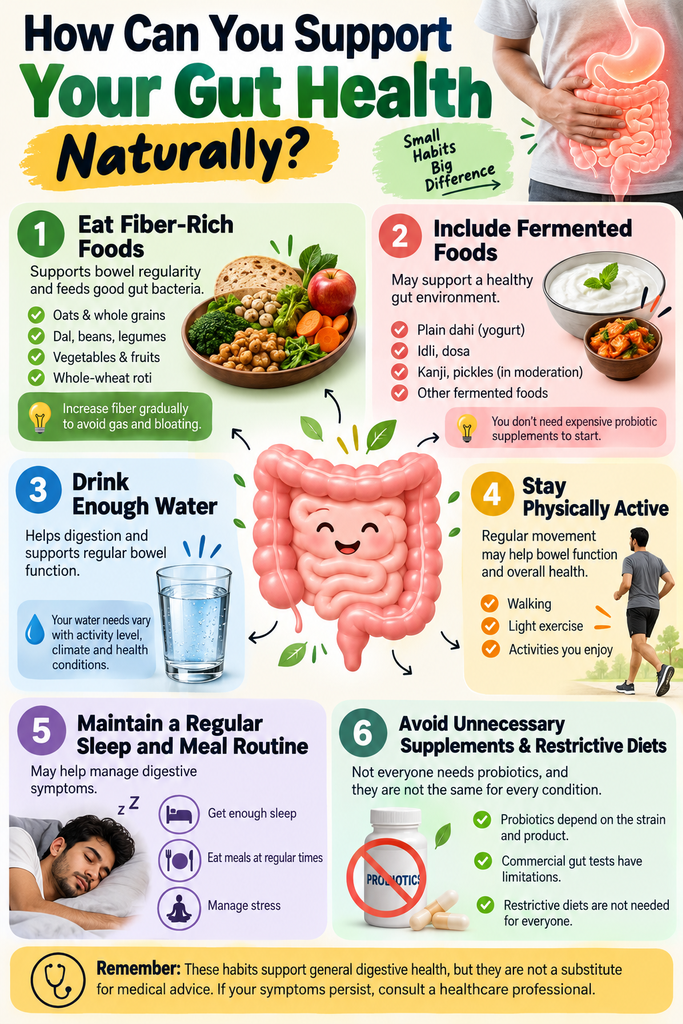
Every digestive problem does not require the same diet or treatment. These everyday habits may support normal digestive function, but they are not substitutes for medical care when symptoms persist.
1. Eat a Variety of Fiber-Rich Foods
Include foods such as oats, whole-wheat roti, dal, beans, vegetables, fruits, and whole grains according to your tolerance.
Fiber supports bowel regularity, and certain types are fermented by gut microorganisms. Increase fiber gradually because a sudden increase may worsen gas and bloating in some people.
2. Include Suitable Fermented Foods
Plain dahi and other suitable fermented foods can fit into a balanced diet if you tolerate them. The microorganisms and potential benefits vary by food and product.
You do not need an expensive probiotic supplement simply to begin eating a more varied diet.
3. Drink Enough Water
Adequate fluid intake supports normal bodily functions and can be particularly useful when increasing fiber intake. Your needs vary with activity level, climate, and health conditions.
Water alone will not treat every cause of constipation, but hydration is an important part of general digestive care.
4. Stay Physically Active
Walking and other regular physical activities support general health and may help bowel function. Choose activities that fit your abilities and routine.
5. Maintain a Regular Sleep and Meal Routine
Consistent sleep, regular meals, and stress-management practices may help some people manage digestive symptoms. If a particular food or eating pattern repeatedly triggers symptoms, discuss it with a healthcare professional.
6. Avoid Unnecessary Supplements and Restrictive Diets
Probiotics are not interchangeable, and their benefits depend on the specific strain, product, and condition. They are not necessary for everyone.
Commercial gut microbiome tests also have limitations. Results may not provide a clear explanation for symptoms or identify a treatment that will help. Testing should be guided by a clinical question rather than purchased simply because you suspect an unhealthy gut.
How Do Doctors Diagnose Gut Health Problems?
There is no single test that can diagnose every gut problem. A doctor chooses investigations according to your symptoms, medical history, examination, and suspected condition.
Medical History and Physical Examination
Your doctor may ask when the symptoms started, how often they occur, what your bowel movements are like, whether particular foods trigger them, and whether you have experienced weight changes.
Your medication use and family history may also help guide the assessment.
Blood Tests
Depending on the suspected condition, blood tests may help assess anemia, nutritional deficiencies, or signs associated with particular diseases. For example, blood tests are commonly used when investigating possible celiac disease.
Stool Tests
Stool tests may be appropriate when a doctor suspects an intestinal infection, blood in the stool, or inflammation. The type of test depends on the symptoms and the condition being investigated.
A routine stool test and a commercial gut microbiome profile are not the same thing.
Breath Tests and Endoscopy
Breath tests may be used to investigate certain conditions, including lactose malabsorption, when clinically appropriate.
An upper gastrointestinal endoscopy or colonoscopy may be recommended when symptoms or other findings suggest the need to examine the digestive tract directly.
Not everyone with bloating or constipation needs these tests. Your doctor can determine which investigations, if any, are appropriate.
Frequently Asked Questions About an Unhealthy Gut
What are the first signs of an unhealthy gut?
Frequent bloating, abdominal discomfort, constipation, diarrhea, and changes in bowel habits are common digestive symptoms that may indicate a problem. However, they can have several causes and do not confirm a gut microbiome imbalance on their own.
How do I know if I have poor gut health?
Pay attention to persistent or recurring digestive symptoms, especially changes in bowel habits or unexplained weight loss. A healthcare professional can review your symptoms and determine whether further investigation is needed. No single symptom or home test can reliably diagnose every gut problem.
Can an unhealthy gut cause bloating and constipation?
Bloating and constipation may occur with several digestive conditions, including IBS. They can also be related to diet, fluid intake, medications, and other factors. Persistent symptoms should be assessed according to their possible cause.
Can poor gut health cause fatigue?
Certain digestive conditions can contribute to fatigue through nutritional deficiencies, chronic inflammation, or inadequate nutrient absorption. However, fatigue has many possible causes and should not automatically be attributed to gut health.
Can gut problems cause food intolerance?
Some digestive conditions can affect how a person tolerates particular foods. For example, lactose intolerance causes symptoms when lactose is not properly digested. Repeated symptoms after eating a particular food deserve evaluation rather than an assumption that all food intolerance results from gut dysbiosis.
How can I improve my gut health naturally?
Eat a balanced diet with a variety of fiber-rich foods, drink enough water, stay physically active, maintain a regular sleep routine, and manage stress. Introduce dietary changes gradually and seek medical advice if symptoms persist or worsen.
How long does it take to improve gut health?
There is no fixed timeline. Improvement depends on the cause of the symptoms. Temporary digestive discomfort may settle relatively quickly, while chronic constipation, IBS, infections, and other conditions may require specific treatment.
Which tests can identify the cause of digestive symptoms?
Depending on your symptoms, a doctor may recommend blood tests, stool tests, breath tests, endoscopy, colonoscopy, or other targeted investigations. Not everyone needs every test, and commercial microbiome testing is not a universal solution.
When should I see a gastroenterologist?
Consult a gastroenterologist if digestive symptoms keep returning, persist despite reasonable self-care, or affect your daily life. Seek prompt medical assessment for blood in stool, unexplained weight loss, persistent vomiting, or worsening symptoms. Severe pain, significant bleeding, or dehydration may require urgent care.
Conclusion
The signs of an unhealthy gut are not limited to one symptom. Frequent bloating, abdominal discomfort, constipation, diarrhea, changes in stool, food intolerance, and unexplained weight loss can all provide clues that something may be affecting your digestive system.
Fatigue and stress-related digestive symptoms may also be relevant in some cases, but they have many possible explanations. Heartburn, meanwhile, may point towards acid reflux rather than a gut microbiome problem.
The most important step is to identify the cause of persistent symptoms instead of assuming that every problem comes from unhealthy gut bacteria. A balanced diet, adequate hydration, physical activity, and good sleep can support digestive health, while ongoing or concerning symptoms may need medical evaluation.
If your digestive problems keep returning, speak with a qualified healthcare professional to understand the possible cause and the appropriate next steps.
Medical disclaimer: This article is for educational purposes only and does not replace professional medical advice, diagnosis, or treatment.