
Written by: Ehtesham Ahmed Faridi, Content Writer & SEO Executive
Medically Reviewed by: Dr. Saumyaleen Roy, MD (Medicine), DM (Gastroenterology), Gold Medalist
Last Medically Reviewed: 18-08-2026
Medical Disclaimer: This article is for educational purposes only and should not replace consultation with a qualified medical professional. Rectal bleeding, severe pain or persistent bowel symptoms should be properly evaluated.
About the Medical Reviewer
Dr. Saumyaleen Roy is a DM Gastroenterology specialist and Gold Medalist practicing in Varanasi. His clinical interests include digestive diseases, liver disorders, pancreatic and biliary diseases, therapeutic endoscopy, EUS and ERCP.
Qualifications: MBBS | MD Medicine | DM Gastroenterology
- Introduction
- Piles vs Fissure: What Is the Difference?
- What Are Piles or Hemorrhoids?
- What Is an Anal Fissure?
- Piles vs Fissure Symptoms: How Can You Tell the Difference?
- Causes and Risk Factors of Piles and Fissure
- Can You Have Piles and Fissure at the Same Time?
- How Are Piles and Fissure Diagnosed?
- Treatment for Piles
- Treatment for Anal Fissure
- Which Is More Painful: Piles or Fissure?
- When Should You See a Doctor for Piles or Fissure?
- How to Prevent Piles and Anal Fissures
- Common Myths About Piles and Fissures
- Frequently Asked Questions About Piles and Fissure
- Conclusion
- Medical References
Introduction
If you have pain, itching, or bleeding while passing stool, you may wonder about the difference between piles and fissure. The two conditions are often confused because both affect the anal region and can cause rectal bleeding. However, they are different conditions. Piles (hemorrhoids) are swollen veins in or around the anus, while an anal fissure is a small tear in the lining of the anus. Piles may cause painless bleeding, itching, swelling, or a lump, whereas a fissure typically causes sharp pain during bowel movements and burning pain afterward.
One of the easiest ways to understand the difference is to look at the pain pattern. Internal piles may cause bright-red bleeding without much pain. A fissure usually causes sharp pain while passing stool, followed by burning pain that can continue for hours. Still, symptoms can overlap. So, persistent or unexplained rectal bleeding should not simply be assumed to be piles or fissure.
Piles vs Fissure: Quick Answer
The simplest way to understand the difference between piles and fissure is this: piles involve swollen blood vessels, while a fissure is a tear in the anal lining. If bleeding occurs without much pain, piles may be more likely. If passing stool causes sharp, cutting, or burning pain, an anal fissure may be more likely. However, symptoms can overlap, so a doctor should confirm the diagnosis when symptoms persist.
Piles vs Fissure: What Is the Difference?
The main difference between piles and fissure is what causes each condition. Piles develop when blood vessels in the anus or lower rectum become swollen. A fissure develops when the thin lining of the anal opening develops a tear. Both may be linked with constipation, hard stools, or straining during bowel movements.
In practical terms, piles often present with bleeding, itching, swelling, or a lump. Fissures are more commonly associated with intense, sharp anal pain during or after bowel movements. However, external or thrombosed hemorrhoids can also be painful. This is why a proper examination is important when symptoms continue.
Quick Comparison: Piles vs Fissure
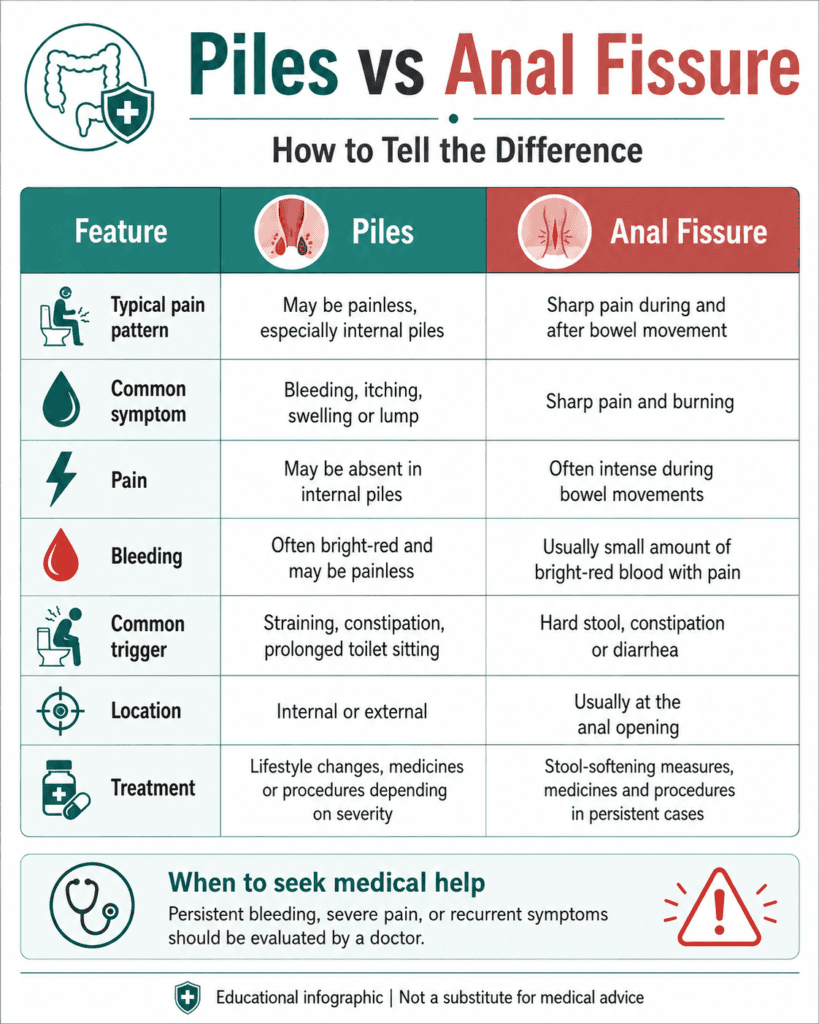
| Feature | Piles | Anal Fissure |
| Typical pain pattern | May be painless, especially internal piles | Sharp pain during and after bowel movement |
| Common symptom | Bleeding, itching, swelling or lump | Sharp pain and burning |
| Pain | May be absent in internal piles | Often intense during bowel movements |
| Bleeding | Often bright-red and may be painless | Usually small amount of bright-red blood with pain |
| Common trigger | Straining, constipation, prolonged toilet sitting | Hard stool, constipation or diarrhea |
| Location | Internal or external | Usually at the anal opening |
| Treatment | Lifestyle changes, medicines or procedures depending on severity | Stool-softening measures, medicines and procedures in persistent cases |
What Are Piles or Hemorrhoids?
Piles are also known as hemorrhoids. They are swollen and inflamed veins around the anus or in the lower rectum. They can be internal or external. Internal hemorrhoids develop inside the rectum, while external hemorrhoids develop under the skin around the anus.
Internal piles often cause bright-red rectal bleeding without significant pain. External piles can cause itching, irritation, swelling, pain, or a hard lump. A thrombosed external hemorrhoid can become particularly painful because a blood clot forms inside it.
Common Symptoms of Piles
The symptoms can vary depending on whether the hemorrhoid is internal or external.
- Bright-red blood on toilet paper or in the toilet
- Itching around the anus
- Anal irritation
- Swelling near the anus
- A lump around the anal opening
- Pain or discomfort, particularly with external piles
- Prolapse of an internal hemorrhoid in some cases
If bleeding continues or symptoms do not improve, medical evaluation is important. Rectal bleeding can have causes other than hemorrhoids.
What Is an Anal Fissure?
An anal fissure is a small tear in the skin or lining at the opening of the anus. It can occur when a hard or large stool stretches and injures the anal lining. Severe diarrhea can also contribute to a fissure.
The typical fissure symptom is different from the usual presentation of internal piles. People often describe fissure pain as sharp, cutting, or burning. The pain may start during bowel movements and continue for minutes or hours afterward. Bright-red blood may also appear on toilet paper or after passing stool.
Common Symptoms of Anal Fissure
Look out for symptoms such as:
- Sharp pain while passing stool
- Burning pain after bowel movements
- Bright-red blood on toilet paper
- Anal discomfort
- A visible tear around the anus
- Muscle spasm around the anal sphincter
- Pain that continues after using the toilet
A fissure can become chronic if it does not heal properly. Persistent symptoms may require medical treatment rather than repeated home remedies.
Piles vs Fissure Symptoms: How Can You Tell the Difference?
When patients ask about the difference between piles and fissure, pain and bleeding patterns are often the first things they want to understand. A simple clue is that internal piles may bleed without causing much pain, while an anal fissure commonly causes significant pain during and after bowel movements.
However, symptoms are not always textbook. External hemorrhoids can be painful, especially when thrombosed. A fissure can also cause bleeding. In my clinical experience, patients sometimes assume that any blood after passing stool means piles. That assumption can delay the correct diagnosis. A proper evaluation is better than self-diagnosing from symptoms alone.
Pain: Piles vs Fissure
Pain is one of the most useful differences between piles and fissure. Internal hemorrhoids are often painless, even when they bleed. External hemorrhoids may cause pain, itching, swelling, or tenderness. Thrombosed hemorrhoids can cause severe pain.
An anal fissure usually causes sharp pain during bowel movements. Burning pain may continue for several hours afterward. This happens because the tear can repeatedly open during bowel movements and the internal anal sphincter may go into spasm.
Bleeding: Piles vs Fissure
Both piles and fissures can cause bright-red rectal bleeding. With internal hemorrhoids, bleeding may occur without significant pain. You may notice blood on the toilet paper, stool, or in the toilet bowl after a bowel movement.
With an anal fissure, bleeding is usually associated with painful bowel movements. The amount may be small, such as spots of bright-red blood on toilet paper. Still, any persistent or unexplained rectal bleeding deserves medical attention because other gastrointestinal conditions can also cause bleeding.
Lump or Tear: What Does It Mean?
A lump around the anus is more suggestive of an external hemorrhoid, although other conditions can also cause swelling. Internal hemorrhoids can also prolapse and become noticeable outside the anal opening.
A fissure is a tear rather than a swollen vein. A long-standing fissure may sometimes be associated with a small skin tag. Because several anal conditions can look or feel similar, a doctor should evaluate persistent symptoms rather than relying only on appearance.
Causes and Risk Factors of Piles and Fissure
Constipation is an important common factor when discussing piles and fissure. Hard stools can put pressure on the anal area, while straining can increase pressure on the veins. However, the underlying mechanism is different for each condition.
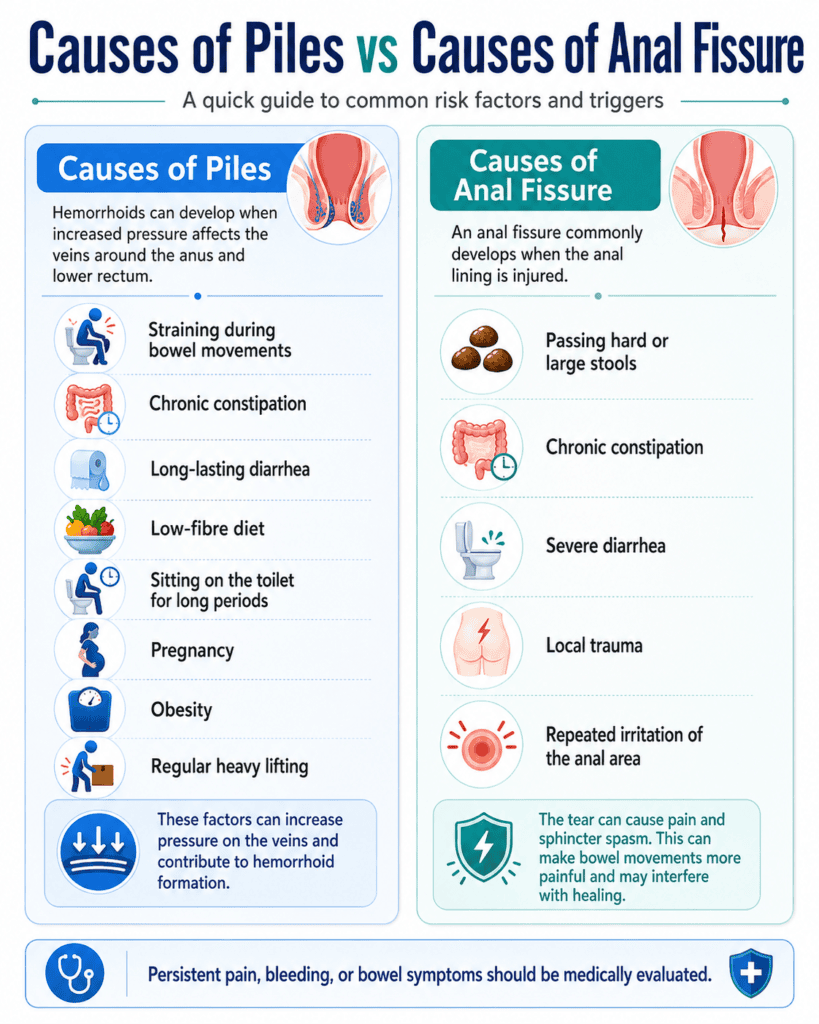
Causes of Piles
Hemorrhoids can develop when increased pressure affects the veins around the anus and lower rectum.
Common risk factors include:
- Straining during bowel movements
- Chronic constipation
- Long-lasting diarrhea
- low-fiber diet
- Sitting on the toilet for long periods
- Pregnancy
- Obesity
- Regular heavy lifting
These factors can increase pressure on the veins and contribute to hemorrhoid formation.
Causes of Anal Fissure
An anal fissure commonly develops when the anal lining is injured.
Possible triggers include:
- Passing hard or large stools
- Chronic constipation
- Severe diarrhea
- Local trauma
- Repeated irritation of the anal area
The tear can cause pain and sphincter spasm. This can make bowel movements more painful and may interfere with healing.
Can You Have Piles and Fissure at the Same Time?
Yes. A person can have hemorrhoids and an anal fissure at the same time. Constipation and straining can contribute to both conditions. For example, repeated hard stools may cause a small tear in the anal lining while straining increases pressure on the hemorrhoid veins.
This is one reason why identifying the difference between piles and fissure matters. Treating only one suspected condition without confirming the diagnosis may not solve the underlying problem. If pain, bleeding, or a lump continues, consult a gastroenterologist or appropriate specialist for an examination.
How Are Piles and Fissure Diagnosed?
Diagnosis starts with your symptoms and medical history. A doctor may ask about your bowel habits, constipation, bleeding, pain, diet, and the duration of your symptoms. For hemorrhoids, an examination of the anal area may be followed by a digital rectal examination or examination of the anal canal and rectum when appropriate.
An anal fissure can often be identified by examining the anal opening and understanding the characteristic pain and bleeding pattern. If the diagnosis is unclear or there are concerning symptoms, additional investigations may be considered. The important point is that rectal bleeding should not automatically be labeled as piles.
Treatment for Piles
Treatment for piles depends on the type and severity of hemorrhoids. Mild symptoms often improve with measures that make stools softer and bowel movements easier. Increasing dietary fiber, drinking adequate fluids, avoiding straining, and avoiding prolonged toilet sitting can help reduce symptoms.
When symptoms persist or hemorrhoids are more advanced, a doctor may recommend an appropriate procedure. Options can include rubber band ligation, sclerotherapy, infrared treatment, electrocoagulation, or surgery for selected severe cases. The right treatment should be decided after clinical assessment.
Lifestyle Measures for Piles
Useful measures include:
- Eat fiber-rich foods.
- Drink adequate fluids.
- Avoid excessive straining.
- Do not sit on the toilet for long periods.
- Stay physically active.
- Address constipation early.
- Follow medical advice if symptoms persist.
These measures are aimed at keeping stools soft and reducing pressure during bowel movements.
Treatment for Anal Fissure
Many acute anal fissures improve with measures that keep stools soft and reduce irritation. fiber, adequate fluids, and warm baths can help make bowel movements more comfortable. If the fissure does not heal or symptoms become worse, medical treatment may be required.
Persistent fissures may require prescription medicines that help relax the anal sphincter and support healing. In selected chronic cases, a specialist may consider a procedure or surgery. Treatment should be based on the cause, duration, and severity of the fissure.
Home Care for an Anal Fissure
Depending on your doctor’s advice, supportive measures may include:
- Eating fiber-rich foods
- Drinking enough fluids
- Avoiding constipation
- Taking warm shallow baths
- Avoiding straining
- Not delaying the urge to pass stool
These steps can help reduce repeated trauma to the anal lining.
Which Is More Painful: Piles or Fissure?
In many cases, an anal fissure causes more intense pain than internal piles. The classic fissure pattern is sharp pain during bowel movements followed by burning pain that can last for some time. Internal hemorrhoids, in contrast, often cause painless bleeding.
However, this does not mean every painful anal condition is a fissure. External and thrombosed hemorrhoids can also cause significant pain and swelling. Therefore, pain intensity alone cannot confirm the diagnosis.
When Should You See a Doctor for Piles or Fissure?
Do not ignore persistent anal pain or rectal bleeding. You should consider medical evaluation if symptoms continue despite home care, keep returning, or interfere with your daily activities. NHS guidance recommends medical assessment when anal fissure symptoms worsen or do not improve after about seven days of self-care.
You should also seek prompt medical attention for significant bleeding, severe anal pain, or bleeding associated with symptoms such as abdominal pain, diarrhea, fever, dizziness, or faintness. Rectal bleeding can have several causes, so it is important not to assume that every episode is caused by piles.
How to Prevent Piles and Anal Fissures
Good bowel habits can reduce the risk of both conditions. The goal is simple: keep stools soft, avoid unnecessary straining, and prevent constipation from becoming a repeated problem. A fiber-rich diet, adequate fluids, regular activity, and sensible toilet habits can support healthy bowel movements.
Simple Prevention Tips
- Include fruits, vegetables, whole grains, and other fiber-rich foods.
- Drink enough fluids.
- Avoid straining while passing stool.
- Do not sit on the toilet for unnecessarily long periods.
- Stay physically active.
- Treat constipation early.
- Do not ignore persistent bleeding or anal pain.
Common Myths About Piles and Fissures
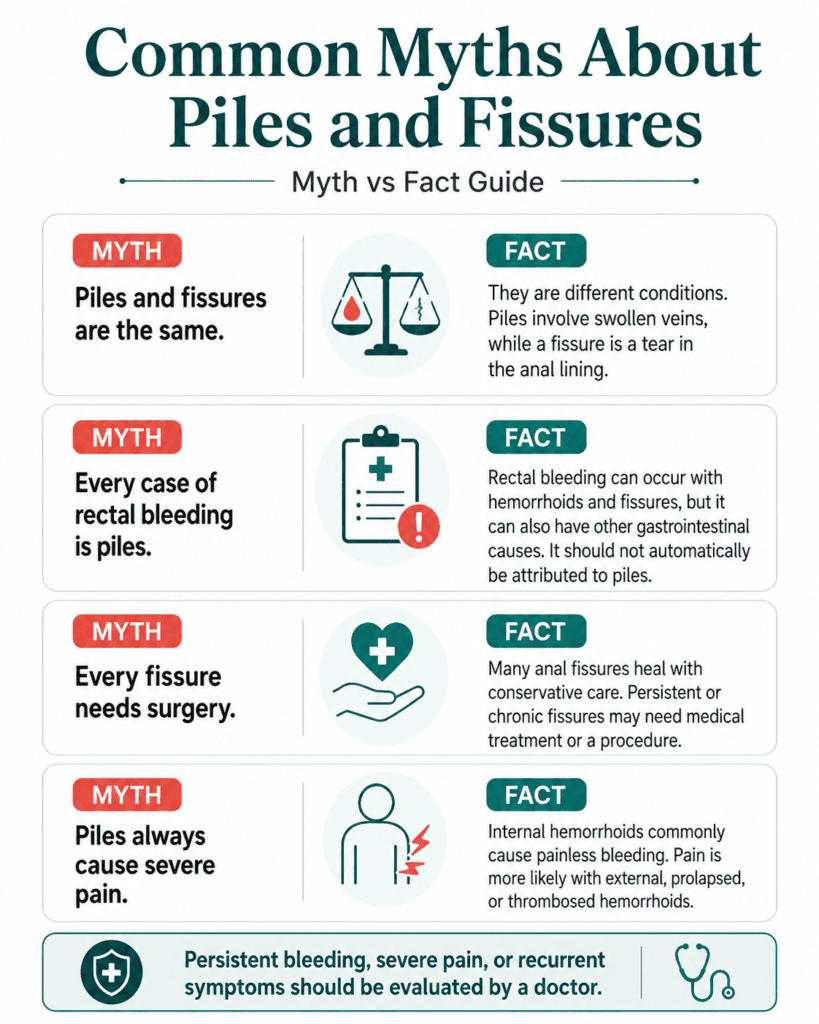
Myth: Piles and fissures are the same.
Fact: They are different conditions. Piles involve swollen veins, while a fissure is a tear in the anal lining.
Myth: Every case of rectal bleeding is piles.
Fact: Rectal bleeding can occur with hemorrhoids and fissures, but it can also have other gastrointestinal causes. It should not automatically be attributed to piles.
Myth: Every fissure needs surgery.
Fact: Many anal fissures heal with conservative care. Persistent or chronic fissures may need medical treatment or a procedure.
Myth: Piles always cause severe pain.
Fact: Internal hemorrhoids commonly cause painless bleeding. Pain is more likely with external, prolapsed, or thrombosed hemorrhoids.
Frequently Asked Questions About Piles and Fissure
Are piles and fissures the same?
No. Piles involve swollen hemorrhoidal tissue, while a fissure is a tear in the anal lining.
Can piles and fissures occur together?
Yes. Constipation and straining may contribute to both, so some patients can have both conditions at the same time.
Which causes more pain?
Anal fissures usually cause sharper pain, while internal piles may bleed without significant pain.
Can fissure heal without surgery?
Many acute fissures improve with stool-softening measures, dietary changes and appropriate medicines. Chronic fissures may require further treatment.
Does every case of piles require surgery?
No. Treatment depends on severity, symptoms and grade. Many patients improve with conservative or office-based treatment.
Is blood in stool always piles?
No. Rectal bleeding may have several causes and persistent bleeding should be evaluated.
Can constipation cause both piles and fissure?
Yes. Hard stools and straining are common risk factors for both.
Which doctor should I consult for piles and fissure?
A gastroenterologist or an appropriate specialist can evaluate rectal bleeding, constipation and anorectal symptoms and determine whether further tests are required.
Conclusion
Understanding the difference between piles and fissure can help you recognise the symptoms and seek the right care. Piles are swollen veins and may cause painless bleeding, itching, swelling, or a lump. A fissure is a tear in the anal lining and typically causes sharp pain during bowel movements, followed by burning discomfort.
Both conditions can be associated with constipation, hard stools, and straining. But they are treated differently depending on their severity and cause. If you have persistent pain, recurrent bleeding, or symptoms that are not improving, avoid self-diagnosis and consult a qualified gastroenterologist.
Get Expert Evaluation for Piles, Fissure and Rectal Bleeding
If you are experiencing persistent anal pain, bleeding while passing stool, constipation, or symptoms that may indicate piles or an anal fissure, professional evaluation can help identify the actual cause.
Dr. Saumyaleen Roy at Shree Vinayaka Gastro Liver Care Clinic provides evaluation and management of digestive and gastrointestinal conditions. If your symptoms are persistent or recurring, consult a gastroenterologist rather than continuing to self-treat.
Your symptoms deserve the right diagnosis—not a guess.
Medical References
- National Institute of Diabetes and Digestive and Kidney Diseases — Hemorrhoids
- American Society of Colon and Rectal Surgeons — Hemorrhoids Clinical Practice Guideline
- American Society of Colon and Rectal Surgeons — Anal Fissure Clinical Practice Guideline
- NHS — Anal Fissure
- Cleveland Clinic — Hemorrhoids / Anal Fissure