
Bloating and ascites can both make your stomach look bigger and feel uncomfortable. However, they have different causes. Bloating usually happens when gas builds up in your digestive system, while ascites occurs when fluid collects inside your abdomen. Bloating is often temporary, but ascites may be linked to serious health problems, especially liver disease. Understanding the difference can help you recognise when abdominal swelling needs medical attention.
What Is the Difference Between Bloating and Ascites?
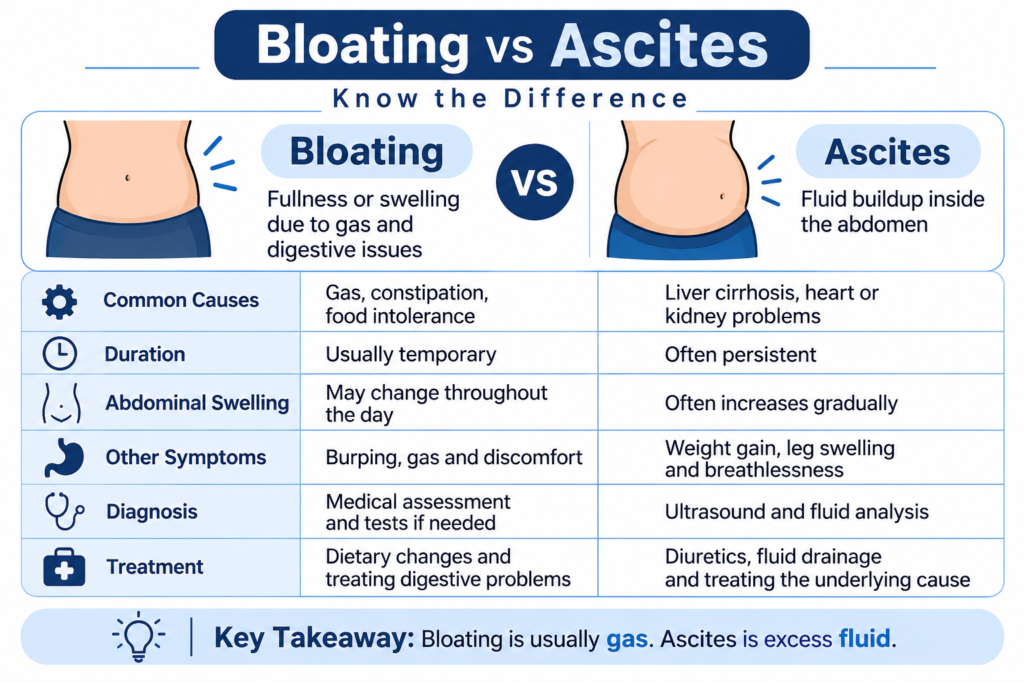
The main difference between bloating and ascites is what causes abdominal swelling. Bloating is usually related to gas, digestion, or constipation. Ascites develops when excess fluid collects in the space between the abdominal organs.
| Comparison | Bloating | Ascites |
| Meaning | Fullness or swelling due to gas and digestive issues | Fluid buildup inside the abdomen |
| Common causes | Gas, constipation, food intolerance | Liver cirrhosis, heart or kidney problems |
| Duration | Usually temporary | Often persistent |
| Abdominal swelling | May change throughout the day | Often increases gradually |
| Other symptoms | Burping, gas and discomfort | Weight gain, leg swelling and breathlessness |
| Diagnosis | Medical assessment and tests if needed | Ultrasound and fluid analysis |
| Treatment | Dietary changes and treating digestive problems | Diuretics, fluid drainage and treating the underlying cause |
What Are the Symptoms of Bloating and Ascites?
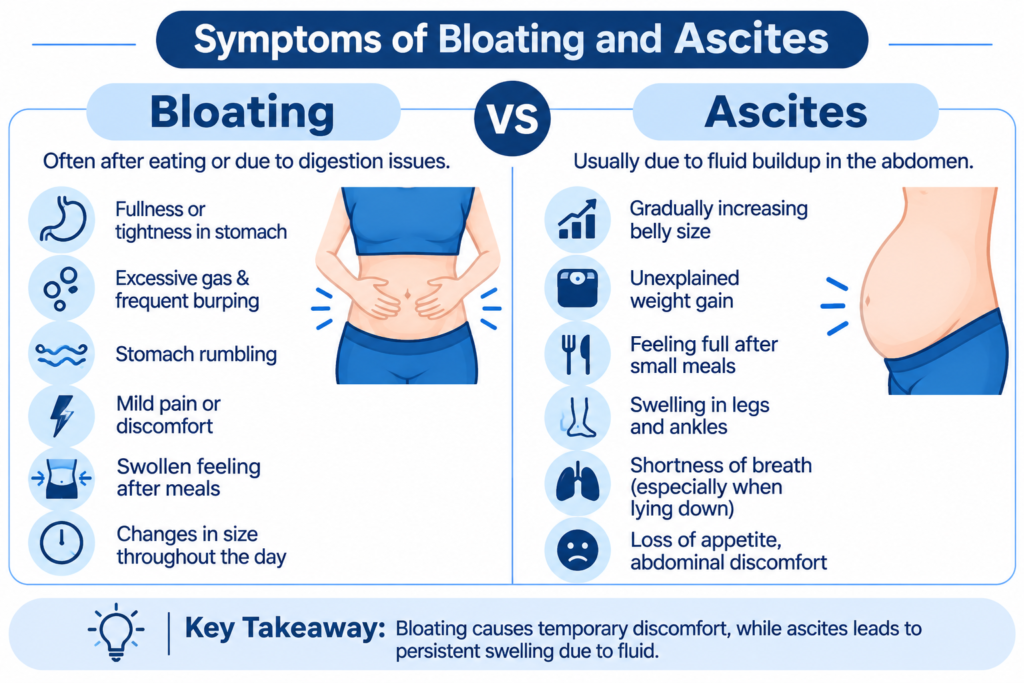
Although both conditions cause abdominal swelling, their symptoms are not always the same.
Common Symptoms of Bloating
Bloating often develops after eating or when digestion is affected. Common symptoms include:
- A feeling of fullness or tightness in the stomach.
- Excessive gas and frequent burping.
- Stomach rumbling.
- Abdominal discomfort or mild pain.
- A swollen feeling after meals.
- Changes in abdominal size throughout the day.
These symptoms may improve after passing gas or having a bowel movement.
Common Symptoms of Ascites
Ascites usually causes gradual swelling because fluid collects inside the abdominal cavity. Other symptoms may include:
- A steadily increasing belly size.
- Unexplained weight gain.
- Feeling full after eating small amounts of food.
- Swelling in the legs and ankles.
- Shortness of breath, especially when lying down.
- Loss of appetite.
- Abdominal discomfort or tenderness.
People with ascites may also experience symptoms related to the underlying condition, such as liver disease.
What Causes Bloating and Ascites?
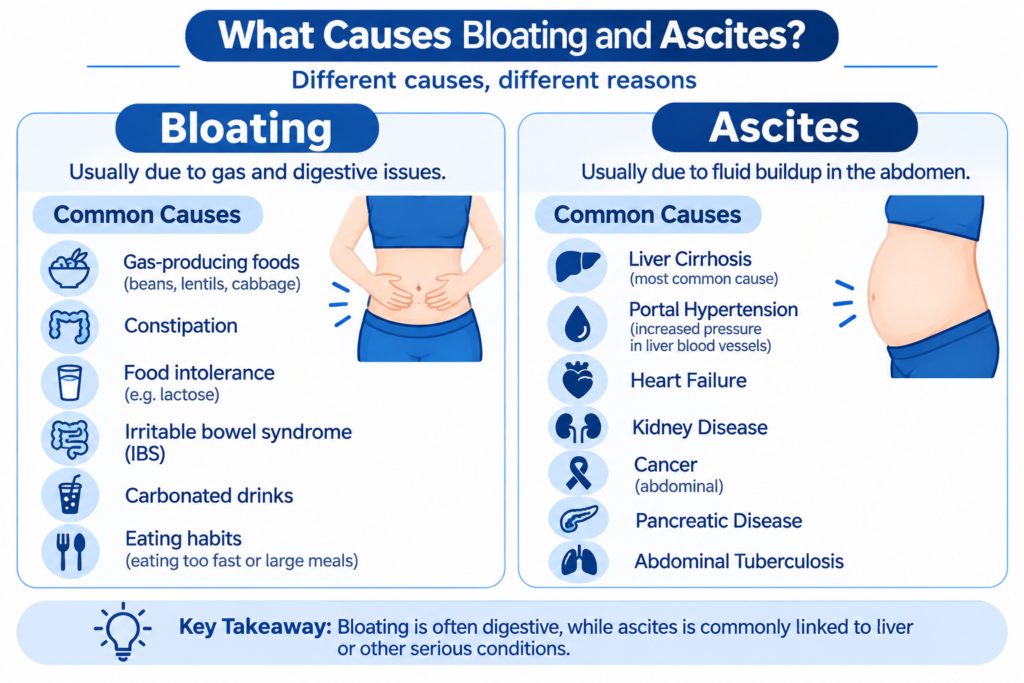
Both conditions have different causes. Bloating is commonly linked to digestive problems, while ascites is often associated with liver-related conditions.
Common Causes of Bloating
Bloating usually occurs when gas builds up in the digestive tract. Some common causes include:
- Gas-producing foods: Beans, lentils, cabbage and broccoli can increase gas production.
- Constipation: Difficulty passing stool can cause gas and abdominal fullness.
- Food intolerance: Difficulty digesting lactose or certain other foods may cause bloating.
- Irritable bowel syndrome (IBS): This digestive condition can cause bloating, abdominal pain and changes in bowel habits.
- Carbonated drinks: Fizzy drinks can increase gas in the digestive system.
- Eating habits: Eating too quickly or having large meals can contribute to bloating.
Common Causes of Ascites
Ascites develops when fluid collects in the abdominal cavity. This can happen due to changes in blood pressure, fluid balance or protein levels in the body.
Common causes include:
- Liver cirrhosis: Scarring of the liver can increase pressure in the portal vein and contribute to fluid accumulation.
- Portal hypertension: Increased pressure in the blood vessels around the liver can cause fluid to leak into the abdomen.
- Heart failure: Poor heart function can lead to fluid retention in different parts of the body.
- Kidney disease: Problems with kidney function can affect the body’s ability to maintain fluid balance.
- Cancer: Certain cancers involving the abdominal organs or lining can cause fluid buildup.
- Pancreatic disease: Some pancreatic conditions can lead to fluid accumulation.
- Abdominal tuberculosis: In some cases, tuberculosis affecting the abdominal lining can cause ascites.
Cirrhosis is one of the most common causes of ascites, but the condition can also develop without liver cirrhosis.
How Can You Tell If Your Swollen Belly Is Bloating or Ascites?
The pattern of abdominal swelling can provide some clues about its cause. However, symptoms alone cannot confirm whether someone has ascites.
Here are some differences to understand:
- Changes during the day: Bloating may become worse after meals and improve after passing gas. Ascites usually causes more persistent swelling.
- Gradual increase in belly size: Ascites may cause the abdomen to become progressively larger over time.
- Unexplained weight gain: Weight gain along with increasing abdominal swelling may be a sign of fluid accumulation.
- Feeling full quickly: People with ascites may feel full after eating only a small amount of food.
- Swelling in other body parts: Leg and ankle swelling can occur along with ascites.
A doctor can determine the actual cause through a physical examination and appropriate tests. Do not rely on the shape or hardness of your stomach to diagnose ascites.
How Are Bloating and Ascites Diagnosed?
Diagnosis depends on the symptoms, medical history and possible underlying causes.
Diagnosis of Bloating
If bloating happens frequently or does not improve, a doctor may ask about your eating habits, bowel movements and digestive symptoms.
Depending on the situation, investigations may include:
- Blood tests to check for possible underlying problems.
- Abdominal X-rays when required.
- Tests for food intolerance or other digestive conditions.
- Colonoscopy if symptoms suggest a bowel problem.
- CT scans in selected cases.
Not everyone with bloating needs all these tests. The doctor recommends investigations based on the symptoms.
Diagnosis of Ascites
If ascites is suspected, the doctor may recommend:
- Physical examination: Checking abdominal swelling and signs of fluid accumulation.
- Abdominal ultrasound: Helps detect fluid inside the abdominal cavity.
- CT scan: Provides detailed images of the abdominal organs when needed.
- Blood tests: Liver and kidney function tests help identify possible underlying causes.
- Diagnostic paracentesis: A small amount of abdominal fluid is collected using a needle for laboratory testing.
Ascitic fluid analysis can help identify the cause of fluid accumulation and check for infection.
What Are the Treatment Options for Bloating and Ascites?
Treatment depends on the cause of abdominal swelling. Bloating usually improves with digestive care, while ascites needs treatment based on the underlying medical condition.
How Is Bloating Treated?
Bloating treatment focuses on reducing gas and improving digestion. Common approaches include:
- Avoiding foods that trigger excessive gas.
- Eating smaller meals instead of large portions.
- Drinking enough water.
- Eating slowly and chewing food properly.
- Staying physically active.
- Managing constipation.
- Treating digestive conditions such as IBS or food intolerance.
A doctor may also recommend medicines depending on the cause and severity of symptoms.
How Is Ascites Treated?
Ascites treatment aims to remove excess fluid and control the condition responsible for its development.
Treatment options may include:
- Salt restriction: Reducing sodium intake helps manage fluid retention.
- Diuretics: Medicines such as spironolactone and furosemide help the body remove excess fluid through urine.
- Paracentesis: A doctor removes excess abdominal fluid using a needle or small tube.
- Albumin infusion: Albumin may be given after large-volume fluid removal to help maintain blood circulation.
- TIPS procedure: In selected patients, this procedure helps reduce pressure in the portal vein.
- Treatment of the underlying disease: Managing liver disease, heart failure or other conditions is important.
The treatment plan depends on the cause, amount of fluid and the patient’s overall health.
When Should You See a Doctor for Abdominal Swelling?
Occasional bloating is common, but persistent or increasing abdominal swelling should not be ignored.
Consult a doctor if you experience:
- Abdominal swelling that does not improve.
- Unexplained weight gain.
- Swelling in your legs or ankles.
- Frequent loss of appetite or early fullness.
- Persistent abdominal discomfort.
- Shortness of breath.
Seek urgent medical attention if you have fever, new or severe abdominal pain, or confusion, especially if you already have ascites. These symptoms may indicate a serious complication such as spontaneous bacterial peritonitis (SBP).
Can You Prevent Bloating and Ascites?
Prevention depends on the underlying cause. Healthy habits may reduce the risk of digestive discomfort and help protect your liver and overall health.
Tips to Reduce Bloating
- Eat slowly and avoid overeating.
- Limit foods that regularly cause gas.
- Drink enough water.
- Exercise regularly.
- Include fibre in your diet gradually.
- Avoid excessive carbonated drinks.
- Manage constipation.
Ways to Reduce the Risk of Ascites
- Avoid excessive alcohol consumption.
- Take steps to prevent hepatitis, including recommended vaccination.
- Maintain a healthy body weight.
- Follow medical advice if you have liver disease.
- Manage existing heart and kidney conditions.
- Attend regular checkups if you are at risk of chronic liver disease.
People who already have ascites should follow their doctor’s dietary and treatment advice rather than making major changes on their own.
Frequently Asked Questions About Bloating and Ascites
1. How Can I Tell If I Have Ascites or Just Bloating?
Bloating often comes and goes and may become worse after meals. Ascites usually causes persistent abdominal swelling that can gradually increase. However, medical examination and imaging are needed to confirm ascites.
2. Does Ascites Make Your Stomach Hard or Soft?
Ascites can make the abdomen feel stretched, tight or firm, especially when a large amount of fluid is present. However, stomach hardness alone cannot confirm ascites.
3. Can Ascites Go Away on Its Own?
Ascites generally needs medical evaluation and treatment. It may improve when the underlying cause is controlled, but simply waiting for the fluid to disappear is not recommended.
4. Can You Have Ascites Without Liver Cirrhosis?
Yes. Although cirrhosis is a common cause, ascites can also develop due to heart failure, kidney disease, certain cancers, pancreatic conditions and abdominal tuberculosis.
5. Does Ascites Cause Weight Gain?
Yes. Fluid accumulation inside the abdomen can increase body weight. Some people notice their belly becoming larger even without eating more food.
6. Can Bloating Turn Into Ascites?
No. Bloating does not directly develop into ascites. They are different conditions with different causes. However, both can occur in the same person.
7. Does Ascites Cause Shortness of Breath?
Yes. A large amount of abdominal fluid can put pressure on the diaphragm, making it harder for the lungs to expand fully. This can cause breathing difficulties.
8. Can an Ultrasound Detect Ascites?
Yes. Abdominal ultrasound can detect fluid accumulation inside the abdominal cavity, even when the amount of fluid is relatively small.
9. What Is the Difference Between Ascites and Belly Fat?
Ascites is fluid collected inside the abdominal cavity, whereas belly fat is fat tissue stored around the abdomen. Both can increase belly size, but their causes and treatments are different.
10. Is Persistent Bloating a Sign of Liver Disease?
Persistent bloating does not always indicate liver disease. However, abdominal swelling along with unexplained weight gain, leg swelling or other symptoms should be evaluated by a doctor.
Final Thoughts
Bloating and ascites may look similar, but they are not the same condition. Bloating is generally associated with gas and digestive problems, whereas ascites involves fluid accumulation inside the abdomen and may indicate an underlying medical condition such as liver cirrhosis.
If your abdominal swelling is persistent, gradually increasing or associated with other symptoms, consult a gastroenterologist or liver specialist to identify the cause and receive appropriate treatment.

Dr. Saumyaleen Roy is a Varanasi-based Gastroenterologist and Liver Specialist practicing at Shree Vinayaka Gastro Liver Care, Satya Complex, Gurudham Chauraha, Varanasi. He earned his MBBS and MD (Medicine) from the Institute of Medical Sciences (IMS), BHU, followed by a DM in Gastroenterology (Gold Medalist) from IGIMS, Patna, and completed advanced fellowship training in Endoscopic Ultrasound (EUS), ERCP, and Third Space Endoscopy.
Backed by 7+ years of clinical experience—and recognized as the first doctor in Purvanchal to perform an EUS-guided gastrojejunostomy—Dr. Roy specializes in treating acidity/GERD, IBS, fatty liver, jaundice, hepatitis B & C, liver cirrhosis, pancreatitis, and GI bleeding through accurate, minimally invasive diagnostics.