

If you have a stomach ulcer, you may wonder, “Which food is good for stomach ulcer?” The short answer is that no single food can cure a stomach ulcer. However, eating balanced meals with foods you tolerate well can help you maintain good nutrition and avoid foods that make your symptoms worse.
There is also no medically recommended “special ulcer diet.” Research has not shown that diet plays an important role in causing, preventing, or treating peptic ulcers. Instead, treatment focuses on finding and addressing the underlying cause, especially H. pylori infection or NSAID use.
Quick Answer: Which Food Is Good for Stomach Ulcer?
The best foods for someone with a stomach ulcer are nutritious foods that do not worsen their symptoms. Depending on individual tolerance, options can include oats, rice, roti, eggs, fish, chicken, vegetables, fruits, curd and other balanced foods.
Foods you may consider
- Oatmeal or other whole grains
- Rice
- Roti or whole-grain bread
- Eggs
- Fish or lean chicken
- Dal and other protein-rich foods, if tolerated
- Cooked vegetables
- Non-irritating fruits
- Plain curd or yogurt, if you tolerate dairy
- Water and other drinks that do not trigger symptoms
The important point is tolerance rather than finding one “ulcer-healing” food.
Which Food Is Good for Ulcer? Focus on a Balanced Diet
A stomach ulcer does not mean you have to survive on a tiny list of bland foods.
Instead, aim for a balanced diet that provides carbohydrates, protein, healthy fats, vitamins, minerals and enough calories to support your overall health.
For example, a simple Indian meal could include:
Rice or roti + dal/egg/fish/chicken + cooked vegetables
You can also include fruit or plain curd if you tolerate them well.
There is no evidence that one particular food can repair an ulcer on its own. Food supports nutrition, while appropriate medical treatment addresses the ulcer and its underlying cause.
10 Foods You Can Consider With a Stomach Ulcer
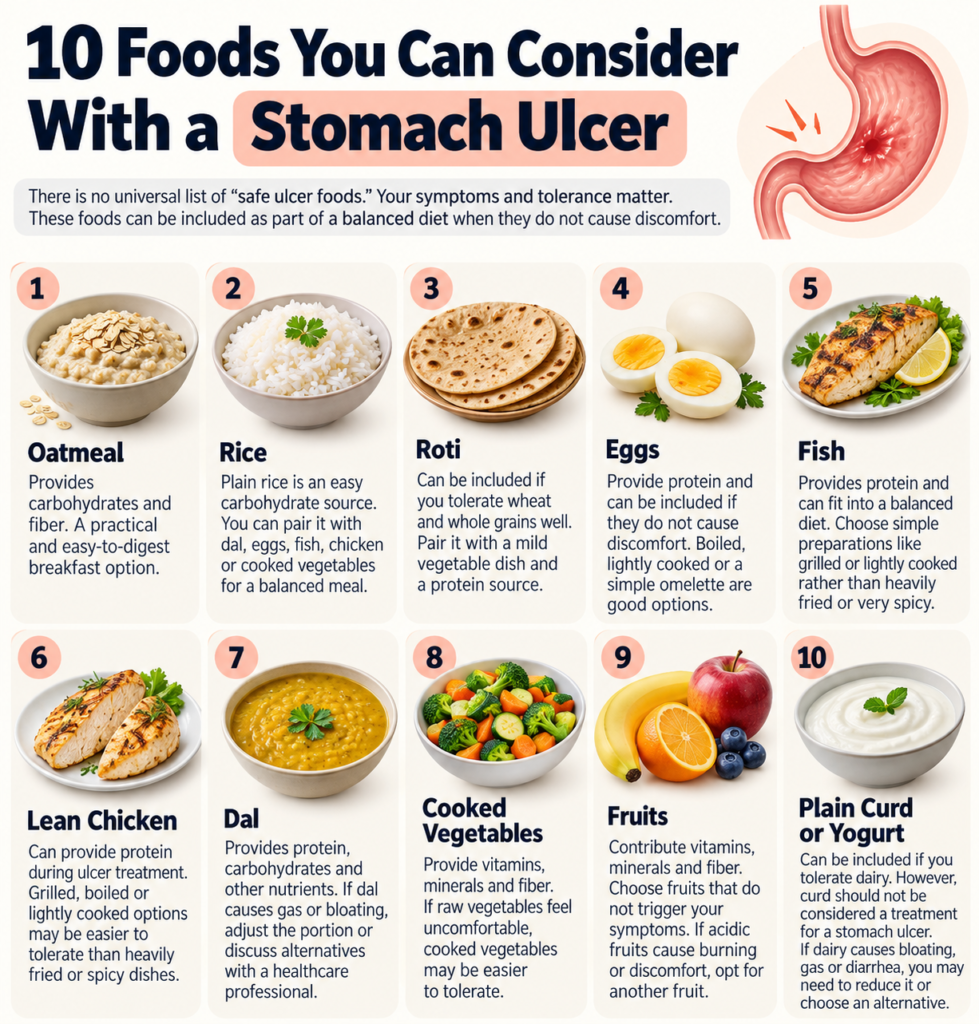
There is no universal list of “safe ulcer foods.” Your symptoms and tolerance matter. The following foods can be reasonable choices as part of a balanced diet when they do not cause discomfort.
1. Oatmeal
Oatmeal provides carbohydrates and fiber and can be a practical breakfast option. Prepare it simply if rich or heavily spiced foods trigger your symptoms.
2. Rice
Plain rice can be an easy-to-use carbohydrate source, particularly when prepared without excessive oil or spices.
You can pair it with dal, eggs, fish, chicken or cooked vegetables to make the meal more balanced.
3. Roti
Roti can remain part of your diet if you tolerate wheat and whole grains well. Pair it with a mild vegetable preparation and a protein source rather than eating an unbalanced meal.
4. Eggs
Eggs provide protein and can be included in meals if they do not cause you digestive discomfort.
Boiled eggs, lightly cooked eggs or an omelette with minimal oil may be practical options.
5. Fish
Fish provides protein and can fit into a balanced diet. Choose preparations that you tolerate rather than heavily fried or very spicy versions if those foods worsen your symptoms.
6. Lean Chicken
Chicken can provide protein during ulcer treatment. Grilled, boiled or lightly cooked preparations may be easier to tolerate than heavily fried or spicy dishes.
7. Dal
Dal provides protein, carbohydrates and other nutrients. However, some people experience gas or bloating after eating certain legumes.
If dal causes significant discomfort, adjust the portion or discuss suitable alternatives with a healthcare professional.
8. Cooked Vegetables
Vegetables provide vitamins, minerals and fiber. If raw vegetables feel uncomfortable, cooked vegetables may be easier for you to tolerate.
There is no need to eliminate vegetables simply because you have an ulcer.
9. Fruits
Fruits can contribute vitamins, minerals and fiber to your diet. Choose fruits that do not trigger your symptoms.
If acidic fruits cause burning or discomfort, you can choose another fruit instead.
10. Plain Curd or Yogurt
Plain curd can be included if you tolerate dairy. However, curd should not be considered a treatment for a stomach ulcer.
If dairy causes bloating, gas or diarrhea, you may need to reduce it or choose an alternative.
What Foods Should You Avoid With a Stomach Ulcer?
There is no universal food list that every person with a stomach ulcer must avoid. However, some foods and drinks can worsen symptoms in certain people.
Common personal triggers may include:
- Very spicy foods
- Fatty or greasy meals
- Coffee
- Chocolate
- Alcohol
- Very acidic foods or drinks, if they trigger symptoms
- Large meals
- Any food that repeatedly causes pain, burning, nausea or discomfort
The NHS recommends avoiding foods or drinks that trigger your symptoms and specifically lists fatty or spicy foods, coffee and chocolate as possible triggers for some people.
The key distinction is important: a food that triggers your symptoms does not necessarily cause the ulcer itself.
Can Spicy Food Cause a Stomach Ulcer?
No, spicy food is not considered a primary cause of peptic ulcers.
The two most common causes are H. pylori infection and NSAIDs, such as aspirin, ibuprofen and naproxen.
However, spicy food can make digestive discomfort worse for some people. If you notice that spicy meals increase burning or abdominal discomfort, reducing them may help you manage symptoms.
Is Banana Good for Stomach Ulcer?
Banana can be part of your diet if you tolerate it, but it does not cure a stomach ulcer.
Bananas provide carbohydrates, fiber and several micronutrients. If banana feels comfortable for you, you can include it as a snack or alongside breakfast.
If a particular fruit causes discomfort, simply choose another fruit that you tolerate better.
Can You Eat Rice With a Stomach Ulcer?
Yes, rice can be included in a stomach-ulcer diet if you tolerate it well.
Rice provides carbohydrates and can form part of a balanced meal. Instead of eating only rice, combine it with a suitable protein source and vegetables.
For example:
Rice + dal + cooked vegetables
or
Rice + fish/chicken + cooked vegetables
The goal is not to make rice a “healing food,” but to use it as part of a nutritious meal.
Can You Eat Roti With a Stomach Ulcer?
Yes, you can generally eat roti if you tolerate wheat and it does not worsen your symptoms.
Choose a simple preparation and pair it with protein and vegetables.
For example:
2 rotis + cooked vegetables + egg/dal
If whole-grain foods cause bloating or discomfort, discuss suitable alternatives with a doctor or registered dietitian rather than eliminating entire food groups unnecessarily.
Can You Eat Eggs With a Stomach Ulcer?
Yes, eggs can be included if you tolerate them.
Eggs provide protein and can help make a meal more nutritionally complete.
The preparation matters more than the food itself for some people. If heavily fried eggs or an oily omelette causes discomfort, try a simpler preparation such as boiled or lightly cooked eggs.
Is Curd Good for Stomach Ulcer?
Curd can be eaten if you tolerate dairy, but it does not cure or heal a stomach ulcer.
Plain, unsweetened curd can be included as part of a balanced diet. However, people who are lactose intolerant or sensitive to dairy may experience gas, bloating or diarrhea.
If you want to understand the topic in more detail, see our guide on “Is Curd Good for Ulcer? Benefits, Risks & Safe Tips.”
Is Milk Good for a Stomach Ulcer?
Milk should not be used as a treatment for a stomach ulcer.
Although milk may feel soothing temporarily for some people, it does not remove the underlying cause of an ulcer.
If you tolerate milk, you do not necessarily need to eliminate it. But if it causes discomfort, bloating or other digestive symptoms, consider reducing it and discussing alternatives with a healthcare professional.
What Is the Best Breakfast for a Stomach Ulcer?
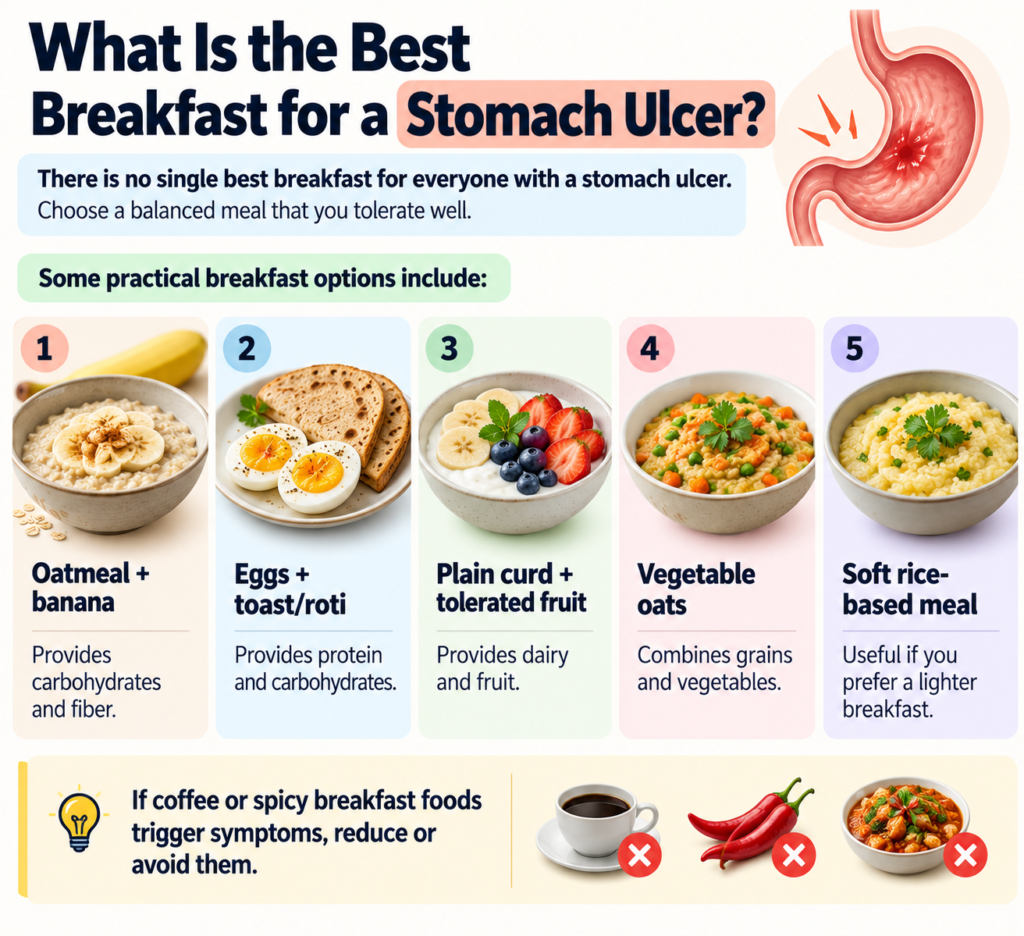
There is no single best breakfast for everyone with a stomach ulcer. Choose a balanced meal that you tolerate well.
Some practical options include:
| Breakfast option | Why it can be practical |
| Oatmeal + banana | Provides carbohydrates and fiber |
| Eggs + toast/roti | Provides protein and carbohydrates |
| Plain curd + tolerated fruit | Provides dairy and fruit |
| Vegetable oats | Combines grains and vegetables |
| Soft rice-based meal | Useful if you prefer a lighter breakfast |
If coffee or spicy breakfast foods trigger symptoms, reduce or avoid them.
What Is the Best Lunch for a Stomach Ulcer?
A balanced lunch can include:
Option 1: Rice + dal + cooked vegetables
Option 2: Roti + mild vegetable + egg
Option 3: Rice + fish + cooked vegetables
Option 4: Roti + chicken + cooked vegetables
You do not need to follow a highly restrictive diet unless your doctor has recommended one for another medical condition.
What Is the Best Dinner for a Stomach Ulcer?
For dinner, focus on a moderate portion and foods you know you tolerate.
Examples include:
- Roti + cooked vegetables + egg
- Rice + dal + vegetables
- Rice + fish + vegetables
- Khichdi + curd, if tolerated
The NHS recommends eating smaller meals and having your evening meal around 3 to 4 hours before going to bed for people managing stomach-ulcer symptoms.
What Should You Drink With a Stomach Ulcer?
Water is a simple choice for staying hydrated.
Other drinks may be suitable depending on your tolerance. However, if coffee, alcohol, highly acidic drinks or other beverages repeatedly worsen your symptoms, avoid or reduce them.
There is no special drink that can heal a peptic ulcer.
Can Food Heal a Stomach Ulcer?
No. Food alone cannot reliably heal a peptic ulcer.
This is one of the most important things to understand.
Peptic ulcers are commonly associated with H. pylori infection and NSAID use. Treatment therefore focuses on the underlying cause rather than relying on a particular food.
Doctors may use medicines such as proton pump inhibitors (PPIs) or H2 blockers to help the ulcer heal. If H. pylori is present, treatment usually involves a combination of medicines, including antibiotics.
So, think of food as supporting your nutrition, not replacing ulcer treatment.
Why Does the Cause of a Stomach Ulcer Matter?
Finding the cause is more important than simply changing your food.
H. pylori Infection
H. pylori is one of the most common causes of peptic ulcers. If testing confirms the infection, your doctor may prescribe a combination of medicines to eliminate it and help prevent the ulcer from returning.
NSAID Use
Medicines such as aspirin, ibuprofen and naproxen can damage the stomach lining and contribute to peptic ulcers.
If you regularly take NSAIDs and develop ulcer symptoms, talk to your doctor before making changes to your medication. Your doctor may recommend changing the medicine, adjusting the dose or using another treatment depending on why you need the medication.
Is There a Special Diet for Stomach Ulcers?
No, doctors do not generally recommend a special diet to prevent or treat peptic ulcers.
According to the National Institute of Diabetes and Digestive and Kidney Diseases (NIDDK), research has not found diet and nutrition to play an important role in causing, preventing or treating peptic ulcers.
That does not mean food is irrelevant.
Your food choices can still affect how comfortable you feel after eating. If certain foods consistently trigger symptoms, you can limit them while maintaining a balanced diet.
How to Plan Your Diet When You Have a Stomach Ulcer
Instead of following an extremely restrictive internet diet, use these five practical steps:
1. Choose foods you tolerate
Pay attention to how your body responds to different foods.
2. Eat balanced meals
Include a carbohydrate source, protein and vegetables or fruit where tolerated.
3. Limit personal triggers
If spicy food, coffee or fatty meals consistently worsen your symptoms, reduce them.
4. Avoid unnecessary restrictions
Don’t remove entire food groups without a clear reason.
5. Follow your treatment plan
Diet cannot replace treatment for H. pylori or an ulcer caused by NSAIDs.
When Should You See a Gastroenterologist?
You should seek medical evaluation if you have persistent or recurrent upper abdominal pain, nausea, unexplained weight loss, repeated vomiting or symptoms that do not improve.
A doctor may evaluate your symptoms, medication history and possible causes such as H. pylori. Depending on your situation, testing may include H. pylori tests or an upper GI endoscopy.
For patients in Varanasi, Dr. Saumyaleen Roy is a consultant gastroenterologist whose documented clinical focus includes the diagnosis and management of gastritis, ulcers and other gastrointestinal conditions. His qualifications include MD Medicine from IMS BHU and DM Gastroenterology from IGIMS Patna, where he received a Gold Medal, along with advanced endoscopy training.
What Are the Warning Signs of a Stomach Ulcer?
A stomach ulcer can sometimes cause serious complications.
Seek urgent medical care if you experience:
- Vomiting blood
- Vomit that looks like coffee grounds
- Black or tarry stools
- Blood in the stool
- Sudden, severe abdominal pain
- Dizziness or fainting
- A rapid pulse or signs of shock
These symptoms can indicate gastrointestinal bleeding or another serious ulcer complication.
Frequently Asked Questions
What is the best food to eat during a stomach ulcer?
There is no single best food for a stomach ulcer. Choose balanced, nutritious foods that you tolerate well, such as rice, oats, eggs, fish, vegetables, fruits and curd if dairy does not cause symptoms.
Can I eat rice if I have a stomach ulcer?
Yes. Rice can be part of a balanced diet if you tolerate it. Pair it with protein and vegetables rather than relying on rice alone.
Is banana good for a stomach ulcer?
Banana can be included if it does not cause discomfort. However, it should not be considered a treatment or cure for a stomach ulcer.
Can I eat eggs with a stomach ulcer?
Yes, eggs can provide useful protein and can be included if you tolerate them. Choose a preparation that does not trigger discomfort.
Is curd good for stomach ulcers?
Curd can be included if you tolerate dairy, but it does not cure or heal an ulcer. Plain curd is a simple option if dairy does not cause bloating or other symptoms.
What foods should I avoid with a stomach ulcer?
There is no universal avoid list. Limit foods or drinks that clearly trigger your symptoms, which may include spicy or fatty foods, coffee, chocolate or alcohol for some people.
Can food heal a stomach ulcer?
No. Food alone does not treat the underlying causes of peptic ulcers. Medical treatment may be necessary, particularly when H. pylori infection or NSAID use is involved.
What can I drink with a stomach ulcer?
Water is a simple choice for hydration. Avoid drinks that repeatedly worsen your symptoms, and do not rely on any beverage as an ulcer treatment.
Can a stomach ulcer heal without treatment?
Some ulcers may heal, but untreated ulcers can cause complications and the underlying cause may remain. Proper medical evaluation is important, particularly when symptoms persist or recur.
How long does a stomach ulcer take to heal?
Healing time depends on the cause, severity and treatment. Treating the underlying cause and following the prescribed treatment plan can help the ulcer heal and reduce the risk of recurrence.
Final Takeaway
So, which food is good for stomach ulcer?
There is no single food that can cure a stomach ulcer. The better approach is to eat a balanced diet based on foods you tolerate well, while limiting foods that clearly worsen your symptoms.
More importantly, don’t treat an ulcer with food alone. H. pylori infection and NSAID use are major causes of peptic ulcers, and addressing the underlying cause is an important part of treatment.
If your symptoms persist, return frequently, or include bleeding, severe pain or vomiting, seek medical evaluation rather than trying to manage the problem through diet alone.
Medically reviewed by: Dr. Saumyaleen Roy, MD (Medicine), DM (Gastroenterology), Gold Medalist, Consultant Gastroenterologist.
Medical Disclaimer: This article is intended for general educational information and should not replace a consultation, diagnosis or treatment plan from a qualified healthcare professional.