
Yes, you can be constipated even if you drink enough water. Constipation is not caused by dehydration alone. Low dietary fiber, lack of physical activity, irregular bowel habits, certain medications or supplements, irritable bowel syndrome with constipation (IBS-C), and slow movement of stool through the colon can all contribute to daily constipation.
If you are having bowel movements but they are hard, difficult to pass, require frequent straining, or leave you feeling that your bowel has not completely emptied, you may still be experiencing constipation. So, if drinking more water has not solved the problem, the next step is to look at your diet, bowel habits, physical activity, medications and overall gastrointestinal health rather than simply increasing your water intake.
What Causes Constipation Every Day Despite Drinking Water?
Water helps maintain adequate hydration and can support softer stools, but a healthy bowel movement depends on several factors working together. Your digestive system needs enough fiber, normal gut motility, regular physical activity and coordinated bowel function to move stool comfortably through the colon.
In some people, constipation has a straightforward lifestyle cause. In others, persistent symptoms may be related to IBS-C, slow-transit constipation, medications or problems affecting how the bowel or pelvic floor muscles work. Finding the underlying cause is particularly important when constipation keeps returning.
Common causes include:
- Low dietary fiber intake
- Not enough physical activity
- Ignoring the urge to have a bowel movement
- Irregular toilet habits
- Changes in diet or daily routine
- Certain medications and supplements
- IBS-C
- Slow movement of stool through the colon
- Problems with the muscles involved in bowel evacuation
1. You May Need More Fiber, Not Just More Water
Dietary fiber is one of the most important parts of a diet that supports regular bowel movements. Fiber adds bulk to stool and can help make it easier to pass. Fruits, vegetables, whole grains, oats, beans, lentils, chickpeas, nuts and seeds are useful sources of fiber.
If your diet contains plenty of refined grains and processed foods but very few fruits, vegetables or whole grains, drinking more water may not make a major difference. Adults generally need around 22–34 grams of fiber per day, although individual requirements vary. Increase fiber gradually because a sudden increase can cause gas or bloating, particularly in people with sensitive digestion.
2. A Sedentary Lifestyle Can Affect Bowel Movements
Your intestine uses coordinated muscle contractions to move its contents through the digestive tract. Regular movement and physical activity can support normal bowel function, while prolonged inactivity may contribute to constipation in some people.
You do not necessarily need an intense workout to improve your bowel habits. If you spend most of your day sitting, start by incorporating more walking and regular movement into your routine. Consistency is more important than doing an occasional strenuous workout.
3. Ignoring the Urge Can Make Constipation Worse
Have you ever felt the urge to use the bathroom but postponed it because you were busy? Doing this occasionally is unlikely to cause a major problem, but repeatedly ignoring the urge can contribute to irregular bowel habits.
Try giving yourself enough time to use the toilet without rushing. A regular routine, particularly after a meal such as breakfast, may help some people establish more predictable bowel movements. Most importantly, don’t make a habit of repeatedly holding in stool when your body signals that it is time to go.
4. Your Medication or Supplement Could Be the Reason
Some medications and supplements can cause constipation. If your symptoms started after taking a new medicine or supplement, this is worth discussing with your doctor or pharmacist.
Do not stop a prescribed medicine on your own. Instead, ask your healthcare professional whether constipation could be a side effect and whether there is a suitable alternative or adjustment. Reviewing your medication list can sometimes reveal a cause that simply drinking more water would never address.
5. IBS-C Can Cause Constipation Along With Bloating
If constipation occurs together with abdominal pain, bloating, changes in bowel habits or incomplete bowel evacuation, IBS-C may be one possible explanation.
Irritable bowel syndrome with constipation (IBS-C) affects the way the digestive system functions and can cause symptoms that come and go. People with IBS-C may experience constipation along with abdominal discomfort or changes in stool consistency. However, symptoms can overlap with other digestive conditions, so persistent symptoms should be evaluated rather than self-diagnosed.
6. Slow Gut Motility May Be Behind Persistent Constipation
Sometimes the issue is not how much water you drink but how quickly stool moves through the bowel. Gut motility refers to the coordinated movement of material through the digestive tract. When stool moves slowly through the colon, more water may be absorbed from it, potentially making the stool harder and more difficult to pass.
This can occur with slow-transit constipation, among other causes. Persistent constipation can also sometimes involve problems with pelvic floor muscles or the process of evacuating stool. If lifestyle changes have not helped, a doctor can assess your symptoms and decide whether further evaluation is appropriate.
A Simple 5-Step Framework to Improve Constipation
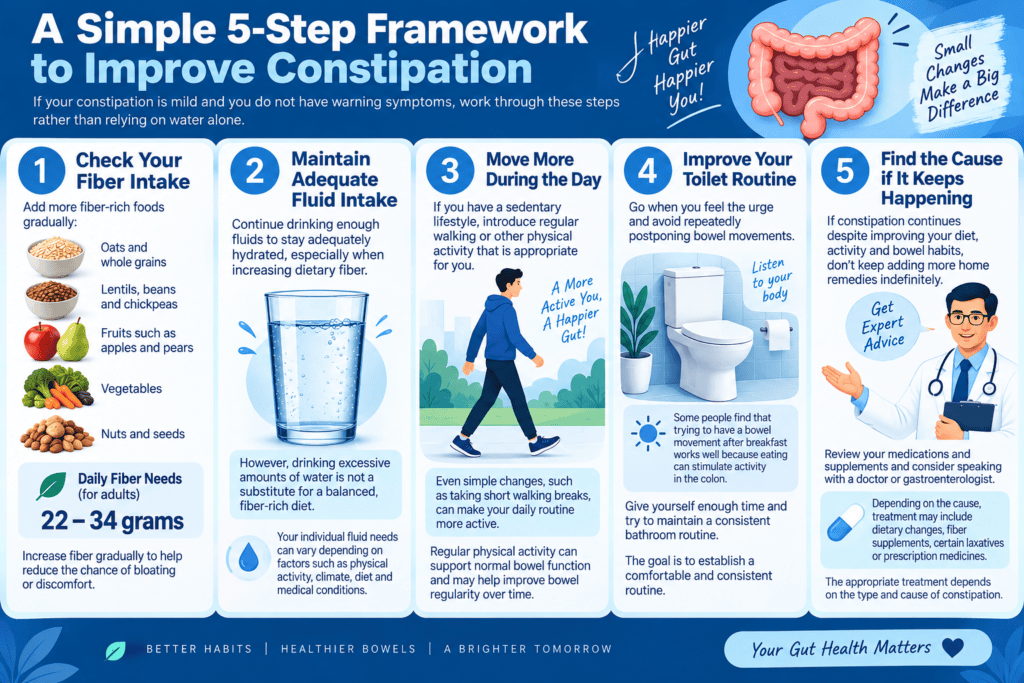
If your constipation is mild and you do not have warning symptoms, work through these steps rather than relying on water alone.
Step 1: Check Your Fiber Intake
Add more fiber-rich foods gradually:
- Oats and whole grains
- Lentils, beans and chickpeas
- Fruits such as apples and pears
- Vegetables
- Nuts and seeds
Adults generally need around 22–34 grams of fiber daily, although individual needs can vary. Increasing fiber gradually may help reduce the chance of bloating or discomfort.
Step 2: Maintain Adequate Fluid Intake
Continue drinking enough fluids to stay adequately hydrated, particularly when increasing dietary fiber. However, drinking excessive amounts of water is not a substitute for a balanced, fiber-rich diet.
Your individual fluid needs can vary depending on factors such as physical activity, climate, diet and medical conditions.
Step 3: Move More During the Day
If you have a sedentary lifestyle, introduce regular walking or other physical activity that is appropriate for you. Even simple changes, such as taking short walking breaks, can make your daily routine more active.
Regular physical activity can support normal bowel function and may help improve bowel regularity over time.
Step 4: Improve Your Toilet Routine
Go when you feel the urge and avoid repeatedly postponing bowel movements. Give yourself enough time and try to maintain a consistent bathroom routine.
Some people find that trying to have a bowel movement after breakfast works well because eating can stimulate activity in the colon. The goal is to establish a comfortable and consistent routine.
Step 5: Find the Cause if It Keeps Happening
If constipation continues despite improving your diet, activity and bowel habits, don’t keep adding more home remedies indefinitely. Review your medications and supplements and consider speaking with a doctor or gastroenterologist.
Depending on the cause, treatment may include dietary changes, fiber supplements, certain laxatives or prescription medicines. The appropriate treatment depends on the type and cause of constipation.
When Is Daily Constipation a Reason to See a Doctor?
Occasional constipation is common. Constipation that is persistent, recurrent or getting worse deserves more attention, especially when lifestyle changes have not helped.
You should seek medical advice if constipation occurs with:
- Blood in the stool or rectal bleeding
- Black or tarry stools
- Unexplained weight loss
- Severe or persistent abdominal pain
- Vomiting
- Fever
- Significant changes in your normal bowel habits
- Inability to pass stool or gas
- Symptoms that continue despite appropriate lifestyle changes
These symptoms do not automatically mean that something serious is wrong, but they should be evaluated rather than managed indefinitely at home.
What Should You Do If Water Isn’t Helping Your Constipation?
If you drink adequate water but remain constipated every day, don’t assume you simply need to drink more. Start by looking at your fiber intake, physical activity, toilet habits and medications. Also consider whether symptoms such as abdominal pain and bloating could point toward IBS-C or another gastrointestinal problem.
A useful approach is to pay attention to your stool consistency, bowel frequency, straining and feeling of complete evacuation. If the problem persists, a medical evaluation can help identify whether you are dealing with chronic constipation, slow-transit constipation, IBS-C or another underlying issue.
Frequently Asked Questions
Can I be constipated even if I drink plenty of water?
Yes. Adequate hydration does not prevent every case of constipation. Low fiber, inactivity, medications, irregular bowel habits, IBS-C and slow gut motility can also contribute to constipation.
Why am I constipated every day but still pooping?
Constipation is not defined only by how often you have a bowel movement. Hard or lumpy stool, straining, difficulty passing stool and a feeling of incomplete evacuation can also be signs of constipation.
What should I eat if I am constipated?
Focus on gradually increasing fiber through fruits, vegetables, whole grains, oats, beans, lentils, nuts and seeds. Adequate fluid intake is also important when increasing fiber.
When should I see a gastroenterologist for constipation?
Consider a medical evaluation if constipation persists or repeatedly returns despite lifestyle changes. Seek prompt medical advice if it is accompanied by bleeding, unexplained weight loss, severe abdominal pain, vomiting, black stools or an inability to pass stool or gas.
Final Takeaway
Drinking water is important, but constipation is rarely a “water-only” problem. If you are constipated every day despite staying hydrated, look at the bigger picture: dietary fiber, physical activity, bowel habits, medications, stool consistency and possible digestive conditions such as IBS-C.
For occasional constipation, simple lifestyle changes may be enough. But if your symptoms are persistent, worsening or accompanied by warning signs, it is better to identify the underlying cause than continue trying one home remedy after another.
Need Help With Persistent Constipation?
If you are struggling with constipation every day despite drinking enough water, don’t ignore persistent or recurring symptoms. Dr. Saumyaleen Roy can help evaluate possible causes such as dietary factors, IBS-C, medication-related constipation or changes in bowel function and recommend an appropriate treatment plan.
Book a consultation with Dr. Saumyaleen Roy today and take the right step toward better digestive health.